
new
Get trending papers in your email inbox once a day!
Get trending papers in your email inbox!
Subscribe


DragonDiffusion: Enabling Drag-style Manipulation on Diffusion Models
Despite the ability of existing large-scale text-to-image (T2I) models to generate high-quality images from detailed textual descriptions, they often lack the ability to precisely edit the generated or real images. In this paper, we propose a novel image editing method, DragonDiffusion, enabling Drag-style manipulation on Diffusion models. Specifically, we construct classifier guidance based on the strong correspondence of intermediate features in the diffusion model. It can transform the editing signals into gradients via feature correspondence loss to modify the intermediate representation of the diffusion model. Based on this guidance strategy, we also build a multi-scale guidance to consider both semantic and geometric alignment. Moreover, a cross-branch self-attention is added to maintain the consistency between the original image and the editing result. Our method, through an efficient design, achieves various editing modes for the generated or real images, such as object moving, object resizing, object appearance replacement, and content dragging. It is worth noting that all editing and content preservation signals come from the image itself, and the model does not require fine-tuning or additional modules. Our source code will be available at https://github.com/MC-E/DragonDiffusion.

ResizeMix: Mixing Data with Preserved Object Information and True Labels
Data augmentation is a powerful technique to increase the diversity of data, which can effectively improve the generalization ability of neural networks in image recognition tasks. Recent data mixing based augmentation strategies have achieved great success. Especially, CutMix uses a simple but effective method to improve the classifiers by randomly cropping a patch from one image and pasting it on another image. To further promote the performance of CutMix, a series of works explore to use the saliency information of the image to guide the mixing. We systematically study the importance of the saliency information for mixing data, and find that the saliency information is not so necessary for promoting the augmentation performance. Furthermore, we find that the cutting based data mixing methods carry two problems of label misallocation and object information missing, which cannot be resolved simultaneously. We propose a more effective but very easily implemented method, namely ResizeMix. We mix the data by directly resizing the source image to a small patch and paste it on another image. The obtained patch preserves more substantial object information compared with conventional cut-based methods. ResizeMix shows evident advantages over CutMix and the saliency-guided methods on both image classification and object detection tasks without additional computation cost, which even outperforms most costly search-based automatic augmentation methods.

MULLER: Multilayer Laplacian Resizer for Vision
Image resizing operation is a fundamental preprocessing module in modern computer vision. Throughout the deep learning revolution, researchers have overlooked the potential of alternative resizing methods beyond the commonly used resizers that are readily available, such as nearest-neighbors, bilinear, and bicubic. The key question of our interest is whether the front-end resizer affects the performance of deep vision models? In this paper, we present an extremely lightweight multilayer Laplacian resizer with only a handful of trainable parameters, dubbed MULLER resizer. MULLER has a bandpass nature in that it learns to boost details in certain frequency subbands that benefit the downstream recognition models. We show that MULLER can be easily plugged into various training pipelines, and it effectively boosts the performance of the underlying vision task with little to no extra cost. Specifically, we select a state-of-the-art vision Transformer, MaxViT, as the baseline, and show that, if trained with MULLER, MaxViT gains up to 0.6% top-1 accuracy, and meanwhile enjoys 36% inference cost saving to achieve similar top-1 accuracy on ImageNet-1k, as compared to the standard training scheme. Notably, MULLER's performance also scales with model size and training data size such as ImageNet-21k and JFT, and it is widely applicable to multiple vision tasks, including image classification, object detection and segmentation, as well as image quality assessment.

Move Anything with Layered Scene Diffusion
Diffusion models generate images with an unprecedented level of quality, but how can we freely rearrange image layouts? Recent works generate controllable scenes via learning spatially disentangled latent codes, but these methods do not apply to diffusion models due to their fixed forward process. In this work, we propose SceneDiffusion to optimize a layered scene representation during the diffusion sampling process. Our key insight is that spatial disentanglement can be obtained by jointly denoising scene renderings at different spatial layouts. Our generated scenes support a wide range of spatial editing operations, including moving, resizing, cloning, and layer-wise appearance editing operations, including object restyling and replacing. Moreover, a scene can be generated conditioned on a reference image, thus enabling object moving for in-the-wild images. Notably, this approach is training-free, compatible with general text-to-image diffusion models, and responsive in less than a second.
DiffEditor: Boosting Accuracy and Flexibility on Diffusion-based Image Editing
Large-scale Text-to-Image (T2I) diffusion models have revolutionized image generation over the last few years. Although owning diverse and high-quality generation capabilities, translating these abilities to fine-grained image editing remains challenging. In this paper, we propose DiffEditor to rectify two weaknesses in existing diffusion-based image editing: (1) in complex scenarios, editing results often lack editing accuracy and exhibit unexpected artifacts; (2) lack of flexibility to harmonize editing operations, e.g., imagine new content. In our solution, we introduce image prompts in fine-grained image editing, cooperating with the text prompt to better describe the editing content. To increase the flexibility while maintaining content consistency, we locally combine stochastic differential equation (SDE) into the ordinary differential equation (ODE) sampling. In addition, we incorporate regional score-based gradient guidance and a time travel strategy into the diffusion sampling, further improving the editing quality. Extensive experiments demonstrate that our method can efficiently achieve state-of-the-art performance on various fine-grained image editing tasks, including editing within a single image (e.g., object moving, resizing, and content dragging) and across images (e.g., appearance replacing and object pasting). Our source code is released at https://github.com/MC-E/DragonDiffusion.
Re-HOLD: Video Hand Object Interaction Reenactment via adaptive Layout-instructed Diffusion Model
Current digital human studies focusing on lip-syncing and body movement are no longer sufficient to meet the growing industrial demand, while human video generation techniques that support interacting with real-world environments (e.g., objects) have not been well investigated. Despite human hand synthesis already being an intricate problem, generating objects in contact with hands and their interactions presents an even more challenging task, especially when the objects exhibit obvious variations in size and shape. To tackle these issues, we present a novel video Reenactment framework focusing on Human-Object Interaction (HOI) via an adaptive Layout-instructed Diffusion model (Re-HOLD). Our key insight is to employ specialized layout representation for hands and objects, respectively. Such representations enable effective disentanglement of hand modeling and object adaptation to diverse motion sequences. To further improve the generation quality of HOI, we design an interactive textural enhancement module for both hands and objects by introducing two independent memory banks. We also propose a layout adjustment strategy for the cross-object reenactment scenario to adaptively adjust unreasonable layouts caused by diverse object sizes during inference. Comprehensive qualitative and quantitative evaluations demonstrate that our proposed framework significantly outperforms existing methods. Project page: https://fyycs.github.io/Re-HOLD.
MSPE: Multi-Scale Patch Embedding Prompts Vision Transformers to Any Resolution
Although Vision Transformers (ViTs) have recently advanced computer vision tasks significantly, an important real-world problem was overlooked: adapting to variable input resolutions. Typically, images are resized to a fixed resolution, such as 224x224, for efficiency during training and inference. However, uniform input size conflicts with real-world scenarios where images naturally vary in resolution. Modifying the preset resolution of a model may severely degrade the performance. In this work, we propose to enhance the model adaptability to resolution variation by optimizing the patch embedding. The proposed method, called Multi-Scale Patch Embedding (MSPE), substitutes the standard patch embedding with multiple variable-sized patch kernels and selects the best parameters for different resolutions, eliminating the need to resize the original image. Our method does not require high-cost training or modifications to other parts, making it easy to apply to most ViT models. Experiments in image classification, segmentation, and detection tasks demonstrate the effectiveness of MSPE, yielding superior performance on low-resolution inputs and performing comparably on high-resolution inputs with existing methods.

Object-Centric Domain Randomization for 3D Shape Reconstruction in the Wild
One of the biggest challenges in single-view 3D shape reconstruction in the wild is the scarcity of <3D shape, 2D image>-paired data from real-world environments. Inspired by remarkable achievements via domain randomization, we propose ObjectDR which synthesizes such paired data via a random simulation of visual variations in object appearances and backgrounds. Our data synthesis framework exploits a conditional generative model (e.g., ControlNet) to generate images conforming to spatial conditions such as 2.5D sketches, which are obtainable through a rendering process of 3D shapes from object collections (e.g., Objaverse-XL). To simulate diverse variations while preserving object silhouettes embedded in spatial conditions, we also introduce a disentangled framework which leverages an initial object guidance. After synthesizing a wide range of data, we pre-train a model on them so that it learns to capture a domain-invariant geometry prior which is consistent across various domains. We validate its effectiveness by substantially improving 3D shape reconstruction models on a real-world benchmark. In a scale-up evaluation, our pre-training achieves 23.6% superior results compared with the pre-training on high-quality computer graphics renderings.




ObjectAdd: Adding Objects into Image via a Training-Free Diffusion Modification Fashion
We introduce ObjectAdd, a training-free diffusion modification method to add user-expected objects into user-specified area. The motive of ObjectAdd stems from: first, describing everything in one prompt can be difficult, and second, users often need to add objects into the generated image. To accommodate with real world, our ObjectAdd maintains accurate image consistency after adding objects with technical innovations in: (1) embedding-level concatenation to ensure correct text embedding coalesce; (2) object-driven layout control with latent and attention injection to ensure objects accessing user-specified area; (3) prompted image inpainting in an attention refocusing & object expansion fashion to ensure rest of the image stays the same. With a text-prompted image, our ObjectAdd allows users to specify a box and an object, and achieves: (1) adding object inside the box area; (2) exact content outside the box area; (3) flawless fusion between the two areas

Retargeting Visual Data with Deformation Fields
Seam carving is an image editing method that enable content-aware resizing, including operations like removing objects. However, the seam-finding strategy based on dynamic programming or graph-cut limits its applications to broader visual data formats and degrees of freedom for editing. Our observation is that describing the editing and retargeting of images more generally by a displacement field yields a generalisation of content-aware deformations. We propose to learn a deformation with a neural network that keeps the output plausible while trying to deform it only in places with low information content. This technique applies to different kinds of visual data, including images, 3D scenes given as neural radiance fields, or even polygon meshes. Experiments conducted on different visual data show that our method achieves better content-aware retargeting compared to previous methods.

ObjectGS: Object-aware Scene Reconstruction and Scene Understanding via Gaussian Splatting
3D Gaussian Splatting is renowned for its high-fidelity reconstructions and real-time novel view synthesis, yet its lack of semantic understanding limits object-level perception. In this work, we propose ObjectGS, an object-aware framework that unifies 3D scene reconstruction with semantic understanding. Instead of treating the scene as a unified whole, ObjectGS models individual objects as local anchors that generate neural Gaussians and share object IDs, enabling precise object-level reconstruction. During training, we dynamically grow or prune these anchors and optimize their features, while a one-hot ID encoding with a classification loss enforces clear semantic constraints. We show through extensive experiments that ObjectGS not only outperforms state-of-the-art methods on open-vocabulary and panoptic segmentation tasks, but also integrates seamlessly with applications like mesh extraction and scene editing. Project page: https://ruijiezhu94.github.io/ObjectGS_page



Continuous Surface Embeddings
In this work, we focus on the task of learning and representing dense correspondences in deformable object categories. While this problem has been considered before, solutions so far have been rather ad-hoc for specific object types (i.e., humans), often with significant manual work involved. However, scaling the geometry understanding to all objects in nature requires more automated approaches that can also express correspondences between related, but geometrically different objects. To this end, we propose a new, learnable image-based representation of dense correspondences. Our model predicts, for each pixel in a 2D image, an embedding vector of the corresponding vertex in the object mesh, therefore establishing dense correspondences between image pixels and 3D object geometry. We demonstrate that the proposed approach performs on par or better than the state-of-the-art methods for dense pose estimation for humans, while being conceptually simpler. We also collect a new in-the-wild dataset of dense correspondences for animal classes and demonstrate that our framework scales naturally to the new deformable object categories.
Shelving, Stacking, Hanging: Relational Pose Diffusion for Multi-modal Rearrangement
We propose a system for rearranging objects in a scene to achieve a desired object-scene placing relationship, such as a book inserted in an open slot of a bookshelf. The pipeline generalizes to novel geometries, poses, and layouts of both scenes and objects, and is trained from demonstrations to operate directly on 3D point clouds. Our system overcomes challenges associated with the existence of many geometrically-similar rearrangement solutions for a given scene. By leveraging an iterative pose de-noising training procedure, we can fit multi-modal demonstration data and produce multi-modal outputs while remaining precise and accurate. We also show the advantages of conditioning on relevant local geometric features while ignoring irrelevant global structure that harms both generalization and precision. We demonstrate our approach on three distinct rearrangement tasks that require handling multi-modality and generalization over object shape and pose in both simulation and the real world. Project website, code, and videos: https://anthonysimeonov.github.io/rpdiff-multi-modal/


ObjectStitch: Generative Object Compositing
Object compositing based on 2D images is a challenging problem since it typically involves multiple processing stages such as color harmonization, geometry correction and shadow generation to generate realistic results. Furthermore, annotating training data pairs for compositing requires substantial manual effort from professionals, and is hardly scalable. Thus, with the recent advances in generative models, in this work, we propose a self-supervised framework for object compositing by leveraging the power of conditional diffusion models. Our framework can hollistically address the object compositing task in a unified model, transforming the viewpoint, geometry, color and shadow of the generated object while requiring no manual labeling. To preserve the input object's characteristics, we introduce a content adaptor that helps to maintain categorical semantics and object appearance. A data augmentation method is further adopted to improve the fidelity of the generator. Our method outperforms relevant baselines in both realism and faithfulness of the synthesized result images in a user study on various real-world images.

What Makes Good Open-Vocabulary Detector: A Disassembling Perspective
Open-vocabulary detection (OVD) is a new object detection paradigm, aiming to localize and recognize unseen objects defined by an unbounded vocabulary. This is challenging since traditional detectors can only learn from pre-defined categories and thus fail to detect and localize objects out of pre-defined vocabulary. To handle the challenge, OVD leverages pre-trained cross-modal VLM, such as CLIP, ALIGN, etc. Previous works mainly focus on the open vocabulary classification part, with less attention on the localization part. We argue that for a good OVD detector, both classification and localization should be parallelly studied for the novel object categories. We show in this work that improving localization as well as cross-modal classification complement each other, and compose a good OVD detector jointly. We analyze three families of OVD methods with different design emphases. We first propose a vanilla method,i.e., cropping a bounding box obtained by a localizer and resizing it into the CLIP. We next introduce another approach, which combines a standard two-stage object detector with CLIP. A two-stage object detector includes a visual backbone, a region proposal network (RPN), and a region of interest (RoI) head. We decouple RPN and ROI head (DRR) and use RoIAlign to extract meaningful features. In this case, it avoids resizing objects. To further accelerate the training time and reduce the model parameters, we couple RPN and ROI head (CRR) as the third approach. We conduct extensive experiments on these three types of approaches in different settings. On the OVD-COCO benchmark, DRR obtains the best performance and achieves 35.8 Novel AP_{50}, an absolute 2.8 gain over the previous state-of-the-art (SOTA). For OVD-LVIS, DRR surpasses the previous SOTA by 1.9 AP_{50} in rare categories. We also provide an object detection dataset called PID and provide a baseline on PID.


Patch n' Pack: NaViT, a Vision Transformer for any Aspect Ratio and Resolution
The ubiquitous and demonstrably suboptimal choice of resizing images to a fixed resolution before processing them with computer vision models has not yet been successfully challenged. However, models such as the Vision Transformer (ViT) offer flexible sequence-based modeling, and hence varying input sequence lengths. We take advantage of this with NaViT (Native Resolution ViT) which uses sequence packing during training to process inputs of arbitrary resolutions and aspect ratios. Alongside flexible model usage, we demonstrate improved training efficiency for large-scale supervised and contrastive image-text pretraining. NaViT can be efficiently transferred to standard tasks such as image and video classification, object detection, and semantic segmentation and leads to improved results on robustness and fairness benchmarks. At inference time, the input resolution flexibility can be used to smoothly navigate the test-time cost-performance trade-off. We believe that NaViT marks a departure from the standard, CNN-designed, input and modelling pipeline used by most computer vision models, and represents a promising direction for ViTs.




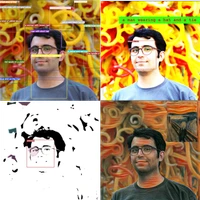
High-Resolution Image Synthesis and Semantic Manipulation with Conditional GANs
We present a new method for synthesizing high-resolution photo-realistic images from semantic label maps using conditional generative adversarial networks (conditional GANs). Conditional GANs have enabled a variety of applications, but the results are often limited to low-resolution and still far from realistic. In this work, we generate 2048x1024 visually appealing results with a novel adversarial loss, as well as new multi-scale generator and discriminator architectures. Furthermore, we extend our framework to interactive visual manipulation with two additional features. First, we incorporate object instance segmentation information, which enables object manipulations such as removing/adding objects and changing the object category. Second, we propose a method to generate diverse results given the same input, allowing users to edit the object appearance interactively. Human opinion studies demonstrate that our method significantly outperforms existing methods, advancing both the quality and the resolution of deep image synthesis and editing.
CenterSnap: Single-Shot Multi-Object 3D Shape Reconstruction and Categorical 6D Pose and Size Estimation
This paper studies the complex task of simultaneous multi-object 3D reconstruction, 6D pose and size estimation from a single-view RGB-D observation. In contrast to instance-level pose estimation, we focus on a more challenging problem where CAD models are not available at inference time. Existing approaches mainly follow a complex multi-stage pipeline which first localizes and detects each object instance in the image and then regresses to either their 3D meshes or 6D poses. These approaches suffer from high-computational cost and low performance in complex multi-object scenarios, where occlusions can be present. Hence, we present a simple one-stage approach to predict both the 3D shape and estimate the 6D pose and size jointly in a bounding-box free manner. In particular, our method treats object instances as spatial centers where each center denotes the complete shape of an object along with its 6D pose and size. Through this per-pixel representation, our approach can reconstruct in real-time (40 FPS) multiple novel object instances and predict their 6D pose and sizes in a single-forward pass. Through extensive experiments, we demonstrate that our approach significantly outperforms all shape completion and categorical 6D pose and size estimation baselines on multi-object ShapeNet and NOCS datasets respectively with a 12.6% absolute improvement in mAP for 6D pose for novel real-world object instances.

RefPose: Leveraging Reference Geometric Correspondences for Accurate 6D Pose Estimation of Unseen Objects
Estimating the 6D pose of unseen objects from monocular RGB images remains a challenging problem, especially due to the lack of prior object-specific knowledge. To tackle this issue, we propose RefPose, an innovative approach to object pose estimation that leverages a reference image and geometric correspondence as guidance. RefPose first predicts an initial pose by using object templates to render the reference image and establish the geometric correspondence needed for the refinement stage. During the refinement stage, RefPose estimates the geometric correspondence of the query based on the generated references and iteratively refines the pose through a render-and-compare approach. To enhance this estimation, we introduce a correlation volume-guided attention mechanism that effectively captures correlations between the query and reference images. Unlike traditional methods that depend on pre-defined object models, RefPose dynamically adapts to new object shapes by leveraging a reference image and geometric correspondence. This results in robust performance across previously unseen objects. Extensive evaluation on the BOP benchmark datasets shows that RefPose achieves state-of-the-art results while maintaining a competitive runtime.
Object Remover Performance Evaluation Methods using Class-wise Object Removal Images
Object removal refers to the process of erasing designated objects from an image while preserving the overall appearance, and it is one area where image inpainting is widely used in real-world applications. The performance of an object remover is quantitatively evaluated by measuring the quality of object removal results, similar to how the performance of an image inpainter is gauged. Current works reporting quantitative performance evaluations utilize original images as references. In this letter, to validate the current evaluation methods cannot properly evaluate the performance of an object remover, we create a dataset with object removal ground truth and compare the evaluations made by the current methods using original images to those utilizing object removal ground truth images. The disparities between two evaluation sets validate that the current methods are not suitable for measuring the performance of an object remover. Additionally, we propose new evaluation methods tailored to gauge the performance of an object remover. The proposed methods evaluate the performance through class-wise object removal results and utilize images without the target class objects as a comparison set. We confirm that the proposed methods can make judgments consistent with human evaluators in the COCO dataset, and that they can produce measurements aligning with those using object removal ground truth in the self-acquired dataset.
Floating No More: Object-Ground Reconstruction from a Single Image
Recent advancements in 3D object reconstruction from single images have primarily focused on improving the accuracy of object shapes. Yet, these techniques often fail to accurately capture the inter-relation between the object, ground, and camera. As a result, the reconstructed objects often appear floating or tilted when placed on flat surfaces. This limitation significantly affects 3D-aware image editing applications like shadow rendering and object pose manipulation. To address this issue, we introduce ORG (Object Reconstruction with Ground), a novel task aimed at reconstructing 3D object geometry in conjunction with the ground surface. Our method uses two compact pixel-level representations to depict the relationship between camera, object, and ground. Experiments show that the proposed ORG model can effectively reconstruct object-ground geometry on unseen data, significantly enhancing the quality of shadow generation and pose manipulation compared to conventional single-image 3D reconstruction techniques.


Object-Driven One-Shot Fine-tuning of Text-to-Image Diffusion with Prototypical Embedding
As large-scale text-to-image generation models have made remarkable progress in the field of text-to-image generation, many fine-tuning methods have been proposed. However, these models often struggle with novel objects, especially with one-shot scenarios. Our proposed method aims to address the challenges of generalizability and fidelity in an object-driven way, using only a single input image and the object-specific regions of interest. To improve generalizability and mitigate overfitting, in our paradigm, a prototypical embedding is initialized based on the object's appearance and its class, before fine-tuning the diffusion model. And during fine-tuning, we propose a class-characterizing regularization to preserve prior knowledge of object classes. To further improve fidelity, we introduce object-specific loss, which can also use to implant multiple objects. Overall, our proposed object-driven method for implanting new objects can integrate seamlessly with existing concepts as well as with high fidelity and generalization. Our method outperforms several existing works. The code will be released.


Track, Inpaint, Resplat: Subject-driven 3D and 4D Generation with Progressive Texture Infilling
Current 3D/4D generation methods are usually optimized for photorealism, efficiency, and aesthetics. However, they often fail to preserve the semantic identity of the subject across different viewpoints. Adapting generation methods with one or few images of a specific subject (also known as Personalization or Subject-driven generation) allows generating visual content that align with the identity of the subject. However, personalized 3D/4D generation is still largely underexplored. In this work, we introduce TIRE (Track, Inpaint, REsplat), a novel method for subject-driven 3D/4D generation. It takes an initial 3D asset produced by an existing 3D generative model as input and uses video tracking to identify the regions that need to be modified. Then, we adopt a subject-driven 2D inpainting model for progressively infilling the identified regions. Finally, we resplat the modified 2D multi-view observations back to 3D while still maintaining consistency. Extensive experiments demonstrate that our approach significantly improves identity preservation in 3D/4D generation compared to state-of-the-art methods. Our project website is available at https://zsh2000.github.io/track-inpaint-resplat.github.io/.

An Object is Worth 64x64 Pixels: Generating 3D Object via Image Diffusion
We introduce a new approach for generating realistic 3D models with UV maps through a representation termed "Object Images." This approach encapsulates surface geometry, appearance, and patch structures within a 64x64 pixel image, effectively converting complex 3D shapes into a more manageable 2D format. By doing so, we address the challenges of both geometric and semantic irregularity inherent in polygonal meshes. This method allows us to use image generation models, such as Diffusion Transformers, directly for 3D shape generation. Evaluated on the ABO dataset, our generated shapes with patch structures achieve point cloud FID comparable to recent 3D generative models, while naturally supporting PBR material generation.


Point2RBox: Combine Knowledge from Synthetic Visual Patterns for End-to-end Oriented Object Detection with Single Point Supervision
With the rapidly increasing demand for oriented object detection (OOD), recent research involving weakly-supervised detectors for learning rotated box (RBox) from the horizontal box (HBox) has attracted more and more attention. In this paper, we explore a more challenging yet label-efficient setting, namely single point-supervised OOD, and present our approach called Point2RBox. Specifically, we propose to leverage two principles: 1) Synthetic pattern knowledge combination: By sampling around each labeled point on the image, we spread the object feature to synthetic visual patterns with known boxes to provide the knowledge for box regression. 2) Transform self-supervision: With a transformed input image (e.g. scaled/rotated), the output RBoxes are trained to follow the same transformation so that the network can perceive the relative size/rotation between objects. The detector is further enhanced by a few devised techniques to cope with peripheral issues, e.g. the anchor/layer assignment as the size of the object is not available in our point supervision setting. To our best knowledge, Point2RBox is the first end-to-end solution for point-supervised OOD. In particular, our method uses a lightweight paradigm, yet it achieves a competitive performance among point-supervised alternatives, 41.05%/27.62%/80.01% on DOTA/DIOR/HRSC datasets.


PointOBB: Learning Oriented Object Detection via Single Point Supervision
Single point-supervised object detection is gaining attention due to its cost-effectiveness. However, existing approaches focus on generating horizontal bounding boxes (HBBs) while ignoring oriented bounding boxes (OBBs) commonly used for objects in aerial images. This paper proposes PointOBB, the first single Point-based OBB generation method, for oriented object detection. PointOBB operates through the collaborative utilization of three distinctive views: an original view, a resized view, and a rotated/flipped (rot/flp) view. Upon the original view, we leverage the resized and rot/flp views to build a scale augmentation module and an angle acquisition module, respectively. In the former module, a Scale-Sensitive Consistency (SSC) loss is designed to enhance the deep network's ability to perceive the object scale. For accurate object angle predictions, the latter module incorporates self-supervised learning to predict angles, which is associated with a scale-guided Dense-to-Sparse (DS) matching strategy for aggregating dense angles corresponding to sparse objects. The resized and rot/flp views are switched using a progressive multi-view switching strategy during training to achieve coupled optimization of scale and angle. Experimental results on the DIOR-R and DOTA-v1.0 datasets demonstrate that PointOBB achieves promising performance, and significantly outperforms potential point-supervised baselines.
VASE: Object-Centric Appearance and Shape Manipulation of Real Videos
Recently, several works tackled the video editing task fostered by the success of large-scale text-to-image generative models. However, most of these methods holistically edit the frame using the text, exploiting the prior given by foundation diffusion models and focusing on improving the temporal consistency across frames. In this work, we introduce a framework that is object-centric and is designed to control both the object's appearance and, notably, to execute precise and explicit structural modifications on the object. We build our framework on a pre-trained image-conditioned diffusion model, integrate layers to handle the temporal dimension, and propose training strategies and architectural modifications to enable shape control. We evaluate our method on the image-driven video editing task showing similar performance to the state-of-the-art, and showcasing novel shape-editing capabilities. Further details, code and examples are available on our project page: https://helia95.github.io/vase-website/

Efficient Part-level 3D Object Generation via Dual Volume Packing
Recent progress in 3D object generation has greatly improved both the quality and efficiency. However, most existing methods generate a single mesh with all parts fused together, which limits the ability to edit or manipulate individual parts. A key challenge is that different objects may have a varying number of parts. To address this, we propose a new end-to-end framework for part-level 3D object generation. Given a single input image, our method generates high-quality 3D objects with an arbitrary number of complete and semantically meaningful parts. We introduce a dual volume packing strategy that organizes all parts into two complementary volumes, allowing for the creation of complete and interleaved parts that assemble into the final object. Experiments show that our model achieves better quality, diversity, and generalization than previous image-based part-level generation methods.
EpiGRAF: Rethinking training of 3D GANs
A very recent trend in generative modeling is building 3D-aware generators from 2D image collections. To induce the 3D bias, such models typically rely on volumetric rendering, which is expensive to employ at high resolutions. During the past months, there appeared more than 10 works that address this scaling issue by training a separate 2D decoder to upsample a low-resolution image (or a feature tensor) produced from a pure 3D generator. But this solution comes at a cost: not only does it break multi-view consistency (i.e. shape and texture change when the camera moves), but it also learns the geometry in a low fidelity. In this work, we show that it is possible to obtain a high-resolution 3D generator with SotA image quality by following a completely different route of simply training the model patch-wise. We revisit and improve this optimization scheme in two ways. First, we design a location- and scale-aware discriminator to work on patches of different proportions and spatial positions. Second, we modify the patch sampling strategy based on an annealed beta distribution to stabilize training and accelerate the convergence. The resulted model, named EpiGRAF, is an efficient, high-resolution, pure 3D generator, and we test it on four datasets (two introduced in this work) at 256^2 and 512^2 resolutions. It obtains state-of-the-art image quality, high-fidelity geometry and trains {approx} 2.5 times faster than the upsampler-based counterparts. Project website: https://universome.github.io/epigraf.
Conditional 360-degree Image Synthesis for Immersive Indoor Scene Decoration
In this paper, we address the problem of conditional scene decoration for 360-degree images. Our method takes a 360-degree background photograph of an indoor scene and generates decorated images of the same scene in the panorama view. To do this, we develop a 360-aware object layout generator that learns latent object vectors in the 360-degree view to enable a variety of furniture arrangements for an input 360-degree background image. We use this object layout to condition a generative adversarial network to synthesize images of an input scene. To further reinforce the generation capability of our model, we develop a simple yet effective scene emptier that removes the generated furniture and produces an emptied scene for our model to learn a cyclic constraint. We train the model on the Structure3D dataset and show that our model can generate diverse decorations with controllable object layout. Our method achieves state-of-the-art performance on the Structure3D dataset and generalizes well to the Zillow indoor scene dataset. Our user study confirms the immersive experiences provided by the realistic image quality and furniture layout in our generation results. Our implementation will be made available.
DualPoseNet: Category-level 6D Object Pose and Size Estimation Using Dual Pose Network with Refined Learning of Pose Consistency
Category-level 6D object pose and size estimation is to predict full pose configurations of rotation, translation, and size for object instances observed in single, arbitrary views of cluttered scenes. In this paper, we propose a new method of Dual Pose Network with refined learning of pose consistency for this task, shortened as DualPoseNet. DualPoseNet stacks two parallel pose decoders on top of a shared pose encoder, where the implicit decoder predicts object poses with a working mechanism different from that of the explicit one; they thus impose complementary supervision on the training of pose encoder. We construct the encoder based on spherical convolutions, and design a module of Spherical Fusion wherein for a better embedding of pose-sensitive features from the appearance and shape observations. Given no testing CAD models, it is the novel introduction of the implicit decoder that enables the refined pose prediction during testing, by enforcing the predicted pose consistency between the two decoders using a self-adaptive loss term. Thorough experiments on benchmarks of both category- and instance-level object pose datasets confirm efficacy of our designs. DualPoseNet outperforms existing methods with a large margin in the regime of high precision. Our code is released publicly at https://github.com/Gorilla-Lab-SCUT/DualPoseNet.

Image Sculpting: Precise Object Editing with 3D Geometry Control
We present Image Sculpting, a new framework for editing 2D images by incorporating tools from 3D geometry and graphics. This approach differs markedly from existing methods, which are confined to 2D spaces and typically rely on textual instructions, leading to ambiguity and limited control. Image Sculpting converts 2D objects into 3D, enabling direct interaction with their 3D geometry. Post-editing, these objects are re-rendered into 2D, merging into the original image to produce high-fidelity results through a coarse-to-fine enhancement process. The framework supports precise, quantifiable, and physically-plausible editing options such as pose editing, rotation, translation, 3D composition, carving, and serial addition. It marks an initial step towards combining the creative freedom of generative models with the precision of graphics pipelines.



Training-free Geometric Image Editing on Diffusion Models
We tackle the task of geometric image editing, where an object within an image is repositioned, reoriented, or reshaped while preserving overall scene coherence. Previous diffusion-based editing methods often attempt to handle all relevant subtasks in a single step, proving difficult when transformations become large or structurally complex. We address this by proposing a decoupled pipeline that separates object transformation, source region inpainting, and target region refinement. Both inpainting and refinement are implemented using a training-free diffusion approach, FreeFine. In experiments on our new GeoBench benchmark, which contains both 2D and 3D editing scenarios, FreeFine outperforms state-of-the-art alternatives in image fidelity, and edit precision, especially under demanding transformations. Code and benchmark are available at: https://github.com/CIawevy/FreeFine
Re-Aligning Language to Visual Objects with an Agentic Workflow
Language-based object detection (LOD) aims to align visual objects with language expressions. A large amount of paired data is utilized to improve LOD model generalizations. During the training process, recent studies leverage vision-language models (VLMs) to automatically generate human-like expressions for visual objects, facilitating training data scaling up. In this process, we observe that VLM hallucinations bring inaccurate object descriptions (e.g., object name, color, and shape) to deteriorate VL alignment quality. To reduce VLM hallucinations, we propose an agentic workflow controlled by an LLM to re-align language to visual objects via adaptively adjusting image and text prompts. We name this workflow Real-LOD, which includes planning, tool use, and reflection steps. Given an image with detected objects and VLM raw language expressions, Real-LOD reasons its state automatically and arranges action based on our neural symbolic designs (i.e., planning). The action will adaptively adjust the image and text prompts and send them to VLMs for object re-description (i.e., tool use). Then, we use another LLM to analyze these refined expressions for feedback (i.e., reflection). These steps are conducted in a cyclic form to gradually improve language descriptions for re-aligning to visual objects. We construct a dataset that contains a tiny amount of 0.18M images with re-aligned language expression and train a prevalent LOD model to surpass existing LOD methods by around 50% on the standard benchmarks. Our Real-LOD workflow, with automatic VL refinement, reveals a potential to preserve data quality along with scaling up data quantity, which further improves LOD performance from a data-alignment perspective.

Physically Compatible 3D Object Modeling from a Single Image
We present a computational framework that transforms single images into 3D physical objects. The visual geometry of a physical object in an image is determined by three orthogonal attributes: mechanical properties, external forces, and rest-shape geometry. Existing single-view 3D reconstruction methods often overlook this underlying composition, presuming rigidity or neglecting external forces. Consequently, the reconstructed objects fail to withstand real-world physical forces, resulting in instability or undesirable deformation -- diverging from their intended designs as depicted in the image. Our optimization framework addresses this by embedding physical compatibility into the reconstruction process. We explicitly decompose the three physical attributes and link them through static equilibrium, which serves as a hard constraint, ensuring that the optimized physical shapes exhibit desired physical behaviors. Evaluations on a dataset collected from Objaverse demonstrate that our framework consistently enhances the physical realism of 3D models over existing methods. The utility of our framework extends to practical applications in dynamic simulations and 3D printing, where adherence to physical compatibility is paramount.

Root Pose Decomposition Towards Generic Non-rigid 3D Reconstruction with Monocular Videos
This work focuses on the 3D reconstruction of non-rigid objects based on monocular RGB video sequences. Concretely, we aim at building high-fidelity models for generic object categories and casually captured scenes. To this end, we do not assume known root poses of objects, and do not utilize category-specific templates or dense pose priors. The key idea of our method, Root Pose Decomposition (RPD), is to maintain a per-frame root pose transformation, meanwhile building a dense field with local transformations to rectify the root pose. The optimization of local transformations is performed by point registration to the canonical space. We also adapt RPD to multi-object scenarios with object occlusions and individual differences. As a result, RPD allows non-rigid 3D reconstruction for complicated scenarios containing objects with large deformations, complex motion patterns, occlusions, and scale diversities of different individuals. Such a pipeline potentially scales to diverse sets of objects in the wild. We experimentally show that RPD surpasses state-of-the-art methods on the challenging DAVIS, OVIS, and AMA datasets.

ObjectCarver: Semi-automatic segmentation, reconstruction and separation of 3D objects
Implicit neural fields have made remarkable progress in reconstructing 3D surfaces from multiple images; however, they encounter challenges when it comes to separating individual objects within a scene. Previous work has attempted to tackle this problem by introducing a framework to train separate signed distance fields (SDFs) simultaneously for each of N objects and using a regularization term to prevent objects from overlapping. However, all of these methods require segmentation masks to be provided, which are not always readily available. We introduce our method, ObjectCarver, to tackle the problem of object separation from just click input in a single view. Given posed multi-view images and a set of user-input clicks to prompt segmentation of the individual objects, our method decomposes the scene into separate objects and reconstructs a high-quality 3D surface for each one. We introduce a loss function that prevents floaters and avoids inappropriate carving-out due to occlusion. In addition, we introduce a novel scene initialization method that significantly speeds up the process while preserving geometric details compared to previous approaches. Despite requiring neither ground truth masks nor monocular cues, our method outperforms baselines both qualitatively and quantitatively. In addition, we introduce a new benchmark dataset for evaluation.

DM-NeRF: 3D Scene Geometry Decomposition and Manipulation from 2D Images
In this paper, we study the problem of 3D scene geometry decomposition and manipulation from 2D views. By leveraging the recent implicit neural representation techniques, particularly the appealing neural radiance fields, we introduce an object field component to learn unique codes for all individual objects in 3D space only from 2D supervision. The key to this component is a series of carefully designed loss functions to enable every 3D point, especially in non-occupied space, to be effectively optimized even without 3D labels. In addition, we introduce an inverse query algorithm to freely manipulate any specified 3D object shape in the learned scene representation. Notably, our manipulation algorithm can explicitly tackle key issues such as object collisions and visual occlusions. Our method, called DM-NeRF, is among the first to simultaneously reconstruct, decompose, manipulate and render complex 3D scenes in a single pipeline. Extensive experiments on three datasets clearly show that our method can accurately decompose all 3D objects from 2D views, allowing any interested object to be freely manipulated in 3D space such as translation, rotation, size adjustment, and deformation.
CHORD: Category-level Hand-held Object Reconstruction via Shape Deformation
In daily life, humans utilize hands to manipulate objects. Modeling the shape of objects that are manipulated by the hand is essential for AI to comprehend daily tasks and to learn manipulation skills. However, previous approaches have encountered difficulties in reconstructing the precise shapes of hand-held objects, primarily owing to a deficiency in prior shape knowledge and inadequate data for training. As illustrated, given a particular type of tool, such as a mug, despite its infinite variations in shape and appearance, humans have a limited number of 'effective' modes and poses for its manipulation. This can be attributed to the fact that humans have mastered the shape prior of the 'mug' category, and can quickly establish the corresponding relations between different mug instances and the prior, such as where the rim and handle are located. In light of this, we propose a new method, CHORD, for Category-level Hand-held Object Reconstruction via shape Deformation. CHORD deforms a categorical shape prior for reconstructing the intra-class objects. To ensure accurate reconstruction, we empower CHORD with three types of awareness: appearance, shape, and interacting pose. In addition, we have constructed a new dataset, COMIC, of category-level hand-object interaction. COMIC contains a rich array of object instances, materials, hand interactions, and viewing directions. Extensive evaluation shows that CHORD outperforms state-of-the-art approaches in both quantitative and qualitative measures. Code, model, and datasets are available at https://kailinli.github.io/CHORD.
InseRF: Text-Driven Generative Object Insertion in Neural 3D Scenes
We introduce InseRF, a novel method for generative object insertion in the NeRF reconstructions of 3D scenes. Based on a user-provided textual description and a 2D bounding box in a reference viewpoint, InseRF generates new objects in 3D scenes. Recently, methods for 3D scene editing have been profoundly transformed, owing to the use of strong priors of text-to-image diffusion models in 3D generative modeling. Existing methods are mostly effective in editing 3D scenes via style and appearance changes or removing existing objects. Generating new objects, however, remains a challenge for such methods, which we address in this study. Specifically, we propose grounding the 3D object insertion to a 2D object insertion in a reference view of the scene. The 2D edit is then lifted to 3D using a single-view object reconstruction method. The reconstructed object is then inserted into the scene, guided by the priors of monocular depth estimation methods. We evaluate our method on various 3D scenes and provide an in-depth analysis of the proposed components. Our experiments with generative insertion of objects in several 3D scenes indicate the effectiveness of our method compared to the existing methods. InseRF is capable of controllable and 3D-consistent object insertion without requiring explicit 3D information as input. Please visit our project page at https://mohamad-shahbazi.github.io/inserf.


Beyond LLaVA-HD: Diving into High-Resolution Large Multimodal Models
Seeing clearly with high resolution is a foundation of Large Multimodal Models (LMMs), which has been proven to be vital for visual perception and reasoning. Existing works usually employ a straightforward resolution upscaling method, where the image consists of global and local branches, with the latter being the sliced image patches but resized to the same resolution as the former. This means that higher resolution requires more local patches, resulting in exorbitant computational expenses, and meanwhile, the dominance of local image tokens may diminish the global context. In this paper, we dive into the problems and propose a new framework as well as an elaborate optimization strategy. Specifically, we extract contextual information from the global view using a mixture of adapters, based on the observation that different adapters excel at different tasks. With regard to local patches, learnable query embeddings are introduced to reduce image tokens, the most important tokens accounting for the user question will be further selected by a similarity-based selector. Our empirical results demonstrate a `less is more' pattern, where utilizing fewer but more informative local image tokens leads to improved performance. Besides, a significant challenge lies in the training strategy, as simultaneous end-to-end training of the global mining block and local compression block does not yield optimal results. We thus advocate for an alternating training way, ensuring balanced learning between global and local aspects. Finally, we also introduce a challenging dataset with high requirements for image detail, enhancing the training of the local compression layer. The proposed method, termed LMM with Sophisticated Tasks, Local image compression, and Mixture of global Experts (SliME), achieves leading performance across various benchmarks with only 2 million training data.

Localizing Object-level Shape Variations with Text-to-Image Diffusion Models
Text-to-image models give rise to workflows which often begin with an exploration step, where users sift through a large collection of generated images. The global nature of the text-to-image generation process prevents users from narrowing their exploration to a particular object in the image. In this paper, we present a technique to generate a collection of images that depicts variations in the shape of a specific object, enabling an object-level shape exploration process. Creating plausible variations is challenging as it requires control over the shape of the generated object while respecting its semantics. A particular challenge when generating object variations is accurately localizing the manipulation applied over the object's shape. We introduce a prompt-mixing technique that switches between prompts along the denoising process to attain a variety of shape choices. To localize the image-space operation, we present two techniques that use the self-attention layers in conjunction with the cross-attention layers. Moreover, we show that these localization techniques are general and effective beyond the scope of generating object variations. Extensive results and comparisons demonstrate the effectiveness of our method in generating object variations, and the competence of our localization techniques.



Reconstructing Hand-Held Objects in 3D
Objects manipulated by the hand (i.e., manipulanda) are particularly challenging to reconstruct from in-the-wild RGB images or videos. Not only does the hand occlude much of the object, but also the object is often only visible in a small number of image pixels. At the same time, two strong anchors emerge in this setting: (1) estimated 3D hands help disambiguate the location and scale of the object, and (2) the set of manipulanda is small relative to all possible objects. With these insights in mind, we present a scalable paradigm for handheld object reconstruction that builds on recent breakthroughs in large language/vision models and 3D object datasets. Our model, MCC-Hand-Object (MCC-HO), jointly reconstructs hand and object geometry given a single RGB image and inferred 3D hand as inputs. Subsequently, we use GPT-4(V) to retrieve a 3D object model that matches the object in the image and rigidly align the model to the network-inferred geometry; we call this alignment Retrieval-Augmented Reconstruction (RAR). Experiments demonstrate that MCC-HO achieves state-of-the-art performance on lab and Internet datasets, and we show how RAR can be used to automatically obtain 3D labels for in-the-wild images of hand-object interactions.


ObjectMover: Generative Object Movement with Video Prior
Simple as it seems, moving an object to another location within an image is, in fact, a challenging image-editing task that requires re-harmonizing the lighting, adjusting the pose based on perspective, accurately filling occluded regions, and ensuring coherent synchronization of shadows and reflections while maintaining the object identity. In this paper, we present ObjectMover, a generative model that can perform object movement in highly challenging scenes. Our key insight is that we model this task as a sequence-to-sequence problem and fine-tune a video generation model to leverage its knowledge of consistent object generation across video frames. We show that with this approach, our model is able to adjust to complex real-world scenarios, handling extreme lighting harmonization and object effect movement. As large-scale data for object movement are unavailable, we construct a data generation pipeline using a modern game engine to synthesize high-quality data pairs. We further propose a multi-task learning strategy that enables training on real-world video data to improve the model generalization. Through extensive experiments, we demonstrate that ObjectMover achieves outstanding results and adapts well to real-world scenarios.



Realistic and Controllable 3D Gaussian-Guided Object Editing for Driving Video Generation
Corner cases are crucial for training and validating autonomous driving systems, yet collecting them from the real world is often costly and hazardous. Editing objects within captured sensor data offers an effective alternative for generating diverse scenarios, commonly achieved through 3D Gaussian Splatting or image generative models. However, these approaches often suffer from limited visual fidelity or imprecise pose control. To address these issues, we propose G^2Editor, a framework designed for photorealistic and precise object editing in driving videos. Our method leverages a 3D Gaussian representation of the edited object as a dense prior, injected into the denoising process to ensure accurate pose control and spatial consistency. A scene-level 3D bounding box layout is employed to reconstruct occluded areas of non-target objects. Furthermore, to guide the appearance details of the edited object, we incorporate hierarchical fine-grained features as additional conditions during generation. Experiments on the Waymo Open Dataset demonstrate that G^2Editor effectively supports object repositioning, insertion, and deletion within a unified framework, outperforming existing methods in both pose controllability and visual quality, while also benefiting downstream data-driven tasks.
Customizing Text-to-Image Diffusion with Camera Viewpoint Control
Model customization introduces new concepts to existing text-to-image models, enabling the generation of the new concept in novel contexts. However, such methods lack accurate camera view control w.r.t the object, and users must resort to prompt engineering (e.g., adding "top-view") to achieve coarse view control. In this work, we introduce a new task -- enabling explicit control of camera viewpoint for model customization. This allows us to modify object properties amongst various background scenes via text prompts, all while incorporating the target camera pose as additional control. This new task presents significant challenges in merging a 3D representation from the multi-view images of the new concept with a general, 2D text-to-image model. To bridge this gap, we propose to condition the 2D diffusion process on rendered, view-dependent features of the new object. During training, we jointly adapt the 2D diffusion modules and 3D feature predictions to reconstruct the object's appearance and geometry while reducing overfitting to the input multi-view images. Our method outperforms existing image editing and model personalization baselines in preserving the custom object's identity while following the input text prompt and the object's camera pose.
ObjFiller-3D: Consistent Multi-view 3D Inpainting via Video Diffusion Models
3D inpainting often relies on multi-view 2D image inpainting, where the inherent inconsistencies across different inpainted views can result in blurred textures, spatial discontinuities, and distracting visual artifacts. These inconsistencies pose significant challenges when striving for accurate and realistic 3D object completion, particularly in applications that demand high fidelity and structural coherence. To overcome these limitations, we propose ObjFiller-3D, a novel method designed for the completion and editing of high-quality and consistent 3D objects. Instead of employing a conventional 2D image inpainting model, our approach leverages a curated selection of state-of-the-art video editing model to fill in the masked regions of 3D objects. We analyze the representation gap between 3D and videos, and propose an adaptation of a video inpainting model for 3D scene inpainting. In addition, we introduce a reference-based 3D inpainting method to further enhance the quality of reconstruction. Experiments across diverse datasets show that compared to previous methods, ObjFiller-3D produces more faithful and fine-grained reconstructions (PSNR of 26.6 vs. NeRFiller (15.9) and LPIPS of 0.19 vs. Instant3dit (0.25)). Moreover, it demonstrates strong potential for practical deployment in real-world 3D editing applications. Project page: https://objfiller3d.github.io/ Code: https://github.com/objfiller3d/ObjFiller-3D .
Repositioning the Subject within Image
Current image manipulation primarily centers on static manipulation, such as replacing specific regions within an image or altering its overall style. In this paper, we introduce an innovative dynamic manipulation task, subject repositioning. This task involves relocating a user-specified subject to a desired position while preserving the image's fidelity. Our research reveals that the fundamental sub-tasks of subject repositioning, which include filling the void left by the repositioned subject, reconstructing obscured portions of the subject and blending the subject to be consistent with surrounding areas, can be effectively reformulated as a unified, prompt-guided inpainting task. Consequently, we can employ a single diffusion generative model to address these sub-tasks using various task prompts learned through our proposed task inversion technique. Additionally, we integrate pre-processing and post-processing techniques to further enhance the quality of subject repositioning. These elements together form our SEgment-gEnerate-and-bLEnd (SEELE) framework. To assess SEELE's effectiveness in subject repositioning, we assemble a real-world subject repositioning dataset called ReS. Our results on ReS demonstrate the quality of repositioned image generation.


SceNeRFlow: Time-Consistent Reconstruction of General Dynamic Scenes
Existing methods for the 4D reconstruction of general, non-rigidly deforming objects focus on novel-view synthesis and neglect correspondences. However, time consistency enables advanced downstream tasks like 3D editing, motion analysis, or virtual-asset creation. We propose SceNeRFlow to reconstruct a general, non-rigid scene in a time-consistent manner. Our dynamic-NeRF method takes multi-view RGB videos and background images from static cameras with known camera parameters as input. It then reconstructs the deformations of an estimated canonical model of the geometry and appearance in an online fashion. Since this canonical model is time-invariant, we obtain correspondences even for long-term, long-range motions. We employ neural scene representations to parametrize the components of our method. Like prior dynamic-NeRF methods, we use a backwards deformation model. We find non-trivial adaptations of this model necessary to handle larger motions: We decompose the deformations into a strongly regularized coarse component and a weakly regularized fine component, where the coarse component also extends the deformation field into the space surrounding the object, which enables tracking over time. We show experimentally that, unlike prior work that only handles small motion, our method enables the reconstruction of studio-scale motions.
LASA: Instance Reconstruction from Real Scans using A Large-scale Aligned Shape Annotation Dataset
Instance shape reconstruction from a 3D scene involves recovering the full geometries of multiple objects at the semantic instance level. Many methods leverage data-driven learning due to the intricacies of scene complexity and significant indoor occlusions. Training these methods often requires a large-scale, high-quality dataset with aligned and paired shape annotations with real-world scans. Existing datasets are either synthetic or misaligned, restricting the performance of data-driven methods on real data. To this end, we introduce LASA, a Large-scale Aligned Shape Annotation Dataset comprising 10,412 high-quality CAD annotations aligned with 920 real-world scene scans from ArkitScenes, created manually by professional artists. On this top, we propose a novel Diffusion-based Cross-Modal Shape Reconstruction (DisCo) method. It is empowered by a hybrid feature aggregation design to fuse multi-modal inputs and recover high-fidelity object geometries. Besides, we present an Occupancy-Guided 3D Object Detection (OccGOD) method and demonstrate that our shape annotations provide scene occupancy clues that can further improve 3D object detection. Supported by LASA, extensive experiments show that our methods achieve state-of-the-art performance in both instance-level scene reconstruction and 3D object detection tasks.

MetaDreamer: Efficient Text-to-3D Creation With Disentangling Geometry and Texture
Generative models for 3D object synthesis have seen significant advancements with the incorporation of prior knowledge distilled from 2D diffusion models. Nevertheless, challenges persist in the form of multi-view geometric inconsistencies and slow generation speeds within the existing 3D synthesis frameworks. This can be attributed to two factors: firstly, the deficiency of abundant geometric a priori knowledge in optimization, and secondly, the entanglement issue between geometry and texture in conventional 3D generation methods.In response, we introduce MetaDreammer, a two-stage optimization approach that leverages rich 2D and 3D prior knowledge. In the first stage, our emphasis is on optimizing the geometric representation to ensure multi-view consistency and accuracy of 3D objects. In the second stage, we concentrate on fine-tuning the geometry and optimizing the texture, thereby achieving a more refined 3D object. Through leveraging 2D and 3D prior knowledge in two stages, respectively, we effectively mitigate the interdependence between geometry and texture. MetaDreamer establishes clear optimization objectives for each stage, resulting in significant time savings in the 3D generation process. Ultimately, MetaDreamer can generate high-quality 3D objects based on textual prompts within 20 minutes, and to the best of our knowledge, it is the most efficient text-to-3D generation method. Furthermore, we introduce image control into the process, enhancing the controllability of 3D generation. Extensive empirical evidence confirms that our method is not only highly efficient but also achieves a quality level that is at the forefront of current state-of-the-art 3D generation techniques.


Paint by Inpaint: Learning to Add Image Objects by Removing Them First
Image editing has advanced significantly with the introduction of text-conditioned diffusion models. Despite this progress, seamlessly adding objects to images based on textual instructions without requiring user-provided input masks remains a challenge. We address this by leveraging the insight that removing objects (Inpaint) is significantly simpler than its inverse process of adding them (Paint), attributed to the utilization of segmentation mask datasets alongside inpainting models that inpaint within these masks. Capitalizing on this realization, by implementing an automated and extensive pipeline, we curate a filtered large-scale image dataset containing pairs of images and their corresponding object-removed versions. Using these pairs, we train a diffusion model to inverse the inpainting process, effectively adding objects into images. Unlike other editing datasets, ours features natural target images instead of synthetic ones; moreover, it maintains consistency between source and target by construction. Additionally, we utilize a large Vision-Language Model to provide detailed descriptions of the removed objects and a Large Language Model to convert these descriptions into diverse, natural-language instructions. We show that the trained model surpasses existing ones both qualitatively and quantitatively, and release the large-scale dataset alongside the trained models for the community.


Category-Aware 3D Object Composition with Disentangled Texture and Shape Multi-view Diffusion
In this paper, we tackle a new task of 3D object synthesis, where a 3D model is composited with another object category to create a novel 3D model. However, most existing text/image/3D-to-3D methods struggle to effectively integrate multiple content sources, often resulting in inconsistent textures and inaccurate shapes. To overcome these challenges, we propose a straightforward yet powerful approach, category+3D-to-3D (C33D), for generating novel and structurally coherent 3D models. Our method begins by rendering multi-view images and normal maps from the input 3D model, then generating a novel 2D object using adaptive text-image harmony (ATIH) with the front-view image and a text description from another object category as inputs. To ensure texture consistency, we introduce texture multi-view diffusion, which refines the textures of the remaining multi-view RGB images based on the novel 2D object. For enhanced shape accuracy, we propose shape multi-view diffusion to improve the 2D shapes of both the multi-view RGB images and the normal maps, also conditioned on the novel 2D object. Finally, these outputs are used to reconstruct a complete and novel 3D model. Extensive experiments demonstrate the effectiveness of our method, yielding impressive 3D creations, such as shark(3D)-crocodile(text) in the first row of Fig. 1. A project page is available at: https://xzr52.github.io/C33D/
Local Scale Equivariance with Latent Deep Equilibrium Canonicalizer
Scale variation is a fundamental challenge in computer vision. Objects of the same class can have different sizes, and their perceived size is further affected by the distance from the camera. These variations are local to the objects, i.e., different object sizes may change differently within the same image. To effectively handle scale variations, we present a deep equilibrium canonicalizer (DEC) to improve the local scale equivariance of a model. DEC can be easily incorporated into existing network architectures and can be adapted to a pre-trained model. Notably, we show that on the competitive ImageNet benchmark, DEC improves both model performance and local scale consistency across four popular pre-trained deep-nets, e.g., ViT, DeiT, Swin, and BEiT. Our code is available at https://github.com/ashiq24/local-scale-equivariance.

CATRE: Iterative Point Clouds Alignment for Category-level Object Pose Refinement
While category-level 9DoF object pose estimation has emerged recently, previous correspondence-based or direct regression methods are both limited in accuracy due to the huge intra-category variances in object shape and color, etc. Orthogonal to them, this work presents a category-level object pose and size refiner CATRE, which is able to iteratively enhance pose estimate from point clouds to produce accurate results. Given an initial pose estimate, CATRE predicts a relative transformation between the initial pose and ground truth by means of aligning the partially observed point cloud and an abstract shape prior. In specific, we propose a novel disentangled architecture being aware of the inherent distinctions between rotation and translation/size estimation. Extensive experiments show that our approach remarkably outperforms state-of-the-art methods on REAL275, CAMERA25, and LM benchmarks up to a speed of ~85.32Hz, and achieves competitive results on category-level tracking. We further demonstrate that CATRE can perform pose refinement on unseen category. Code and trained models are available.

Specifying Object Attributes and Relations in Interactive Scene Generation
We introduce a method for the generation of images from an input scene graph. The method separates between a layout embedding and an appearance embedding. The dual embedding leads to generated images that better match the scene graph, have higher visual quality, and support more complex scene graphs. In addition, the embedding scheme supports multiple and diverse output images per scene graph, which can be further controlled by the user. We demonstrate two modes of per-object control: (i) importing elements from other images, and (ii) navigation in the object space, by selecting an appearance archetype. Our code is publicly available at https://www.github.com/ashual/scene_generation

When Do We Not Need Larger Vision Models?
Scaling up the size of vision models has been the de facto standard to obtain more powerful visual representations. In this work, we discuss the point beyond which larger vision models are not necessary. First, we demonstrate the power of Scaling on Scales (S^2), whereby a pre-trained and frozen smaller vision model (e.g., ViT-B or ViT-L), run over multiple image scales, can outperform larger models (e.g., ViT-H or ViT-G) on classification, segmentation, depth estimation, Multimodal LLM (MLLM) benchmarks, and robotic manipulation. Notably, S^2 achieves state-of-the-art performance in detailed understanding of MLLM on the V* benchmark, surpassing models such as GPT-4V. We examine the conditions under which S^2 is a preferred scaling approach compared to scaling on model size. While larger models have the advantage of better generalization on hard examples, we show that features of larger vision models can be well approximated by those of multi-scale smaller models. This suggests most, if not all, of the representations learned by current large pre-trained models can also be obtained from multi-scale smaller models. Our results show that a multi-scale smaller model has comparable learning capacity to a larger model, and pre-training smaller models with S^2 can match or even exceed the advantage of larger models. We release a Python package that can apply S^2 on any vision model with one line of code: https://github.com/bfshi/scaling_on_scales.



Templates for 3D Object Pose Estimation Revisited: Generalization to New Objects and Robustness to Occlusions
We present a method that can recognize new objects and estimate their 3D pose in RGB images even under partial occlusions. Our method requires neither a training phase on these objects nor real images depicting them, only their CAD models. It relies on a small set of training objects to learn local object representations, which allow us to locally match the input image to a set of "templates", rendered images of the CAD models for the new objects. In contrast with the state-of-the-art methods, the new objects on which our method is applied can be very different from the training objects. As a result, we are the first to show generalization without retraining on the LINEMOD and Occlusion-LINEMOD datasets. Our analysis of the failure modes of previous template-based approaches further confirms the benefits of local features for template matching. We outperform the state-of-the-art template matching methods on the LINEMOD, Occlusion-LINEMOD and T-LESS datasets. Our source code and data are publicly available at https://github.com/nv-nguyen/template-pose

ObjectMate: A Recurrence Prior for Object Insertion and Subject-Driven Generation
This paper introduces a tuning-free method for both object insertion and subject-driven generation. The task involves composing an object, given multiple views, into a scene specified by either an image or text. Existing methods struggle to fully meet the task's challenging objectives: (i) seamlessly composing the object into the scene with photorealistic pose and lighting, and (ii) preserving the object's identity. We hypothesize that achieving these goals requires large scale supervision, but manually collecting sufficient data is simply too expensive. The key observation in this paper is that many mass-produced objects recur across multiple images of large unlabeled datasets, in different scenes, poses, and lighting conditions. We use this observation to create massive supervision by retrieving sets of diverse views of the same object. This powerful paired dataset enables us to train a straightforward text-to-image diffusion architecture to map the object and scene descriptions to the composited image. We compare our method, ObjectMate, with state-of-the-art methods for object insertion and subject-driven generation, using a single or multiple references. Empirically, ObjectMate achieves superior identity preservation and more photorealistic composition. Differently from many other multi-reference methods, ObjectMate does not require slow test-time tuning.


SINGAPO: Single Image Controlled Generation of Articulated Parts in Objects
We address the challenge of creating 3D assets for household articulated objects from a single image. Prior work on articulated object creation either requires multi-view multi-state input, or only allows coarse control over the generation process. These limitations hinder the scalability and practicality for articulated object modeling. In this work, we propose a method to generate articulated objects from a single image. Observing the object in resting state from an arbitrary view, our method generates an articulated object that is visually consistent with the input image. To capture the ambiguity in part shape and motion posed by a single view of the object, we design a diffusion model that learns the plausible variations of objects in terms of geometry and kinematics. To tackle the complexity of generating structured data with attributes in multiple domains, we design a pipeline that produces articulated objects from high-level structure to geometric details in a coarse-to-fine manner, where we use a part connectivity graph and part abstraction as proxies. Our experiments show that our method outperforms the state-of-the-art in articulated object creation by a large margin in terms of the generated object realism, resemblance to the input image, and reconstruction quality.
ObjectComposer: Consistent Generation of Multiple Objects Without Fine-tuning
Recent text-to-image generative models can generate high-fidelity images from text prompts. However, these models struggle to consistently generate the same objects in different contexts with the same appearance. Consistent object generation is important to many downstream tasks like generating comic book illustrations with consistent characters and setting. Numerous approaches attempt to solve this problem by extending the vocabulary of diffusion models through fine-tuning. However, even lightweight fine-tuning approaches can be prohibitively expensive to run at scale and in real-time. We introduce a method called ObjectComposer for generating compositions of multiple objects that resemble user-specified images. Our approach is training-free, leveraging the abilities of preexisting models. We build upon the recent BLIP-Diffusion model, which can generate images of single objects specified by reference images. ObjectComposer enables the consistent generation of compositions containing multiple specific objects simultaneously, all without modifying the weights of the underlying models.

Segment Any Mesh
We propose Segment Any Mesh, a novel zero-shot mesh part segmentation method that overcomes the limitations of shape analysis-based, learning-based, and contemporary approaches. Our approach operates in two phases: multimodal rendering and 2D-to-3D lifting. In the first phase, multiview renders of the mesh are individually processed through Segment Anything to generate 2D masks. These masks are then lifted into a mesh part segmentation by associating masks that refer to the same mesh part across the multiview renders. We find that applying Segment Anything to multimodal feature renders of normals and shape diameter scalars achieves better results than using only untextured renders of meshes. By building our method on top of Segment Anything, we seamlessly inherit any future improvements made to 2D segmentation. We compare our method with a robust, well-evaluated shape analysis method, Shape Diameter Function, and show that our method is comparable to or exceeds its performance. Since current benchmarks contain limited object diversity, we also curate and release a dataset of generated meshes and use it to demonstrate our method's improved generalization over Shape Diameter Function via human evaluation. We release the code and dataset at https://github.com/gtangg12/samesh
Instructive3D: Editing Large Reconstruction Models with Text Instructions
Transformer based methods have enabled users to create, modify, and comprehend text and image data. Recently proposed Large Reconstruction Models (LRMs) further extend this by providing the ability to generate high-quality 3D models with the help of a single object image. These models, however, lack the ability to manipulate or edit the finer details, such as adding standard design patterns or changing the color and reflectance of the generated objects, thus lacking fine-grained control that may be very helpful in domains such as augmented reality, animation and gaming. Naively training LRMs for this purpose would require generating precisely edited images and 3D object pairs, which is computationally expensive. In this paper, we propose Instructive3D, a novel LRM based model that integrates generation and fine-grained editing, through user text prompts, of 3D objects into a single model. We accomplish this by adding an adapter that performs a diffusion process conditioned on a text prompt specifying edits in the triplane latent space representation of 3D object models. Our method does not require the generation of edited 3D objects. Additionally, Instructive3D allows us to perform geometrically consistent modifications, as the edits done through user-defined text prompts are applied to the triplane latent representation thus enhancing the versatility and precision of 3D objects generated. We compare the objects generated by Instructive3D and a baseline that first generates the 3D object meshes using a standard LRM model and then edits these 3D objects using text prompts when images are provided from the Objaverse LVIS dataset. We find that Instructive3D produces qualitatively superior 3D objects with the properties specified by the edit prompts.
Expansion and Shrinkage of Localization for Weakly-Supervised Semantic Segmentation
Generating precise class-aware pseudo ground-truths, a.k.a, class activation maps (CAMs), is essential for weakly-supervised semantic segmentation. The original CAM method usually produces incomplete and inaccurate localization maps. To tackle with this issue, this paper proposes an Expansion and Shrinkage scheme based on the offset learning in the deformable convolution, to sequentially improve the recall and precision of the located object in the two respective stages. In the Expansion stage, an offset learning branch in a deformable convolution layer, referred as "expansion sampler" seeks for sampling increasingly less discriminative object regions, driven by an inverse supervision signal that maximizes image-level classification loss. The located more complete object in the Expansion stage is then gradually narrowed down to the final object region during the Shrinkage stage. In the Shrinkage stage, the offset learning branch of another deformable convolution layer, referred as "shrinkage sampler", is introduced to exclude the false positive background regions attended in the Expansion stage to improve the precision of the localization maps. We conduct various experiments on PASCAL VOC 2012 and MS COCO 2014 to well demonstrate the superiority of our method over other state-of-the-art methods for weakly-supervised semantic segmentation. Code will be made publicly available here https://github.com/TyroneLi/ESOL_WSSS.

SAT-HMR: Real-Time Multi-Person 3D Mesh Estimation via Scale-Adaptive Tokens
We propose a one-stage framework for real-time multi-person 3D human mesh estimation from a single RGB image. While current one-stage methods, which follow a DETR-style pipeline, achieve state-of-the-art (SOTA) performance with high-resolution inputs, we observe that this particularly benefits the estimation of individuals in smaller scales of the image (e.g., those far from the camera), but at the cost of significantly increased computation overhead. To address this, we introduce scale-adaptive tokens that are dynamically adjusted based on the relative scale of each individual in the image within the DETR framework. Specifically, individuals in smaller scales are processed at higher resolutions, larger ones at lower resolutions, and background regions are further distilled. These scale-adaptive tokens more efficiently encode the image features, facilitating subsequent decoding to regress the human mesh, while allowing the model to allocate computational resources more effectively and focus on more challenging cases. Experiments show that our method preserves the accuracy benefits of high-resolution processing while substantially reducing computational cost, achieving real-time inference with performance comparable to SOTA methods.

Object-Conditioned Energy-Based Attention Map Alignment in Text-to-Image Diffusion Models
Text-to-image diffusion models have shown great success in generating high-quality text-guided images. Yet, these models may still fail to semantically align generated images with the provided text prompts, leading to problems like incorrect attribute binding and/or catastrophic object neglect. Given the pervasive object-oriented structure underlying text prompts, we introduce a novel object-conditioned Energy-Based Attention Map Alignment (EBAMA) method to address the aforementioned problems. We show that an object-centric attribute binding loss naturally emerges by approximately maximizing the log-likelihood of a z-parameterized energy-based model with the help of the negative sampling technique. We further propose an object-centric intensity regularizer to prevent excessive shifts of objects attention towards their attributes. Extensive qualitative and quantitative experiments, including human evaluation, on several challenging benchmarks demonstrate the superior performance of our method over previous strong counterparts. With better aligned attention maps, our approach shows great promise in further enhancing the text-controlled image editing ability of diffusion models.

Category-Level Metric Scale Object Shape and Pose Estimation
Advances in deep learning recognition have led to accurate object detection with 2D images. However, these 2D perception methods are insufficient for complete 3D world information. Concurrently, advanced 3D shape estimation approaches focus on the shape itself, without considering metric scale. These methods cannot determine the accurate location and orientation of objects. To tackle this problem, we propose a framework that jointly estimates a metric scale shape and pose from a single RGB image. Our framework has two branches: the Metric Scale Object Shape branch (MSOS) and the Normalized Object Coordinate Space branch (NOCS). The MSOS branch estimates the metric scale shape observed in the camera coordinates. The NOCS branch predicts the normalized object coordinate space (NOCS) map and performs similarity transformation with the rendered depth map from a predicted metric scale mesh to obtain 6d pose and size. Additionally, we introduce the Normalized Object Center Estimation (NOCE) to estimate the geometrically aligned distance from the camera to the object center. We validated our method on both synthetic and real-world datasets to evaluate category-level object pose and shape.

Refaçade: Editing Object with Given Reference Texture
Recent advances in diffusion models have brought remarkable progress in image and video editing, yet some tasks remain underexplored. In this paper, we introduce a new task, Object Retexture, which transfers local textures from a reference object to a target object in images or videos. To perform this task, a straightforward solution is to use ControlNet conditioned on the source structure and the reference texture. However, this approach suffers from limited controllability for two reasons: conditioning on the raw reference image introduces unwanted structural information, and it fails to disentangle the visual texture and structure information of the source. To address this problem, we propose Refaçade, a method that consists of two key designs to achieve precise and controllable texture transfer in both images and videos. First, we employ a texture remover trained on paired textured/untextured 3D mesh renderings to remove appearance information while preserving the geometry and motion of source videos. Second, we disrupt the reference global layout using a jigsaw permutation, encouraging the model to focus on local texture statistics rather than the global layout of the object. Extensive experiments demonstrate superior visual quality, precise editing, and controllability, outperforming strong baselines in both quantitative and human evaluations. Code is available at https://github.com/fishZe233/Refacade.
FineGrasp: Towards Robust Grasping for Delicate Objects
Recent advancements in robotic grasping have led to its integration as a core module in many manipulation systems. For instance, language-driven semantic segmentation enables the grasping of any designated object or object part. However, existing methods often struggle to generate feasible grasp poses for small objects or delicate components, potentially causing the entire pipeline to fail. To address this issue, we propose a novel grasping method, FineGrasp, which introduces improvements in three key aspects. First, we introduce multiple network modifications to enhance the ability of to handle delicate regions. Second, we address the issue of label imbalance and propose a refined graspness label normalization strategy. Third, we introduce a new simulated grasp dataset and show that mixed sim-to-real training further improves grasp performance. Experimental results show significant improvements, especially in grasping small objects, and confirm the effectiveness of our system in semantic grasping.
LGMCTS: Language-Guided Monte-Carlo Tree Search for Executable Semantic Object Rearrangement
We introduce a novel approach to the executable semantic object rearrangement problem. In this challenge, a robot seeks to create an actionable plan that rearranges objects within a scene according to a pattern dictated by a natural language description. Unlike existing methods such as StructFormer and StructDiffusion, which tackle the issue in two steps by first generating poses and then leveraging a task planner for action plan formulation, our method concurrently addresses pose generation and action planning. We achieve this integration using a Language-Guided Monte-Carlo Tree Search (LGMCTS). Quantitative evaluations are provided on two simulation datasets, and complemented by qualitative tests with a real robot.
Scaling may be all you need for achieving human-level object recognition capacity with human-like visual experience
This paper asks whether current self-supervised learning methods, if sufficiently scaled up, would be able to reach human-level visual object recognition capabilities with the same type and amount of visual experience humans learn from. Previous work on this question only considered the scaling of data size. Here, we consider the simultaneous scaling of data size, model size, and image resolution. We perform a scaling experiment with vision transformers up to 633M parameters in size (ViT-H/14) trained with up to 5K hours of human-like video data (long, continuous, mostly egocentric videos) with image resolutions of up to 476x476 pixels. The efficiency of masked autoencoders (MAEs) as a self-supervised learning algorithm makes it possible to run this scaling experiment on an unassuming academic budget. We find that it is feasible to reach human-level object recognition capacity at sub-human scales of model size, data size, and image size, if these factors are scaled up simultaneously. To give a concrete example, we estimate that a 2.5B parameter ViT model trained with 20K hours (2.3 years) of human-like video data with a spatial resolution of 952x952 pixels should be able to reach roughly human-level accuracy on ImageNet. Human-level competence is thus achievable for a fundamental perceptual capability from human-like perceptual experience (human-like in both amount and type) with extremely generic learning algorithms and architectures and without any substantive inductive biases.

ZeroShape: Regression-based Zero-shot Shape Reconstruction
We study the problem of single-image zero-shot 3D shape reconstruction. Recent works learn zero-shot shape reconstruction through generative modeling of 3D assets, but these models are computationally expensive at train and inference time. In contrast, the traditional approach to this problem is regression-based, where deterministic models are trained to directly regress the object shape. Such regression methods possess much higher computational efficiency than generative methods. This raises a natural question: is generative modeling necessary for high performance, or conversely, are regression-based approaches still competitive? To answer this, we design a strong regression-based model, called ZeroShape, based on the converging findings in this field and a novel insight. We also curate a large real-world evaluation benchmark, with objects from three different real-world 3D datasets. This evaluation benchmark is more diverse and an order of magnitude larger than what prior works use to quantitatively evaluate their models, aiming at reducing the evaluation variance in our field. We show that ZeroShape not only achieves superior performance over state-of-the-art methods, but also demonstrates significantly higher computational and data efficiency.


GeoRemover: Removing Objects and Their Causal Visual Artifacts
Towards intelligent image editing, object removal should eliminate both the target object and its causal visual artifacts, such as shadows and reflections. However, existing image appearance-based methods either follow strictly mask-aligned training and fail to remove these causal effects which are not explicitly masked, or adopt loosely mask-aligned strategies that lack controllability and may unintentionally over-erase other objects. We identify that these limitations stem from ignoring the causal relationship between an object's geometry presence and its visual effects. To address this limitation, we propose a geometry-aware two-stage framework that decouples object removal into (1) geometry removal and (2) appearance rendering. In the first stage, we remove the object directly from the geometry (e.g., depth) using strictly mask-aligned supervision, enabling structure-aware editing with strong geometric constraints. In the second stage, we render a photorealistic RGB image conditioned on the updated geometry, where causal visual effects are considered implicitly as a result of the modified 3D geometry. To guide learning in the geometry removal stage, we introduce a preference-driven objective based on positive and negative sample pairs, encouraging the model to remove objects as well as their causal visual artifacts while avoiding new structural insertions. Extensive experiments demonstrate that our method achieves state-of-the-art performance in removing both objects and their associated artifacts on two popular benchmarks. The code is available at https://github.com/buxiangzhiren/GeoRemover.

Embodied Hands: Modeling and Capturing Hands and Bodies Together
Humans move their hands and bodies together to communicate and solve tasks. Capturing and replicating such coordinated activity is critical for virtual characters that behave realistically. Surprisingly, most methods treat the 3D modeling and tracking of bodies and hands separately. Here we formulate a model of hands and bodies interacting together and fit it to full-body 4D sequences. When scanning or capturing the full body in 3D, hands are small and often partially occluded, making their shape and pose hard to recover. To cope with low-resolution, occlusion, and noise, we develop a new model called MANO (hand Model with Articulated and Non-rigid defOrmations). MANO is learned from around 1000 high-resolution 3D scans of hands of 31 subjects in a wide variety of hand poses. The model is realistic, low-dimensional, captures non-rigid shape changes with pose, is compatible with standard graphics packages, and can fit any human hand. MANO provides a compact mapping from hand poses to pose blend shape corrections and a linear manifold of pose synergies. We attach MANO to a standard parameterized 3D body shape model (SMPL), resulting in a fully articulated body and hand model (SMPL+H). We illustrate SMPL+H by fitting complex, natural, activities of subjects captured with a 4D scanner. The fitting is fully automatic and results in full body models that move naturally with detailed hand motions and a realism not seen before in full body performance capture. The models and data are freely available for research purposes in our website (http://mano.is.tue.mpg.de).
FlexEdit: Flexible and Controllable Diffusion-based Object-centric Image Editing
Our work addresses limitations seen in previous approaches for object-centric editing problems, such as unrealistic results due to shape discrepancies and limited control in object replacement or insertion. To this end, we introduce FlexEdit, a flexible and controllable editing framework for objects where we iteratively adjust latents at each denoising step using our FlexEdit block. Initially, we optimize latents at test time to align with specified object constraints. Then, our framework employs an adaptive mask, automatically extracted during denoising, to protect the background while seamlessly blending new content into the target image. We demonstrate the versatility of FlexEdit in various object editing tasks and curate an evaluation test suite with samples from both real and synthetic images, along with novel evaluation metrics designed for object-centric editing. We conduct extensive experiments on different editing scenarios, demonstrating the superiority of our editing framework over recent advanced text-guided image editing methods. Our project page is published at https://flex-edit.github.io/.


Towards Physical Understanding in Video Generation: A 3D Point Regularization Approach
We present a novel video generation framework that integrates 3-dimensional geometry and dynamic awareness. To achieve this, we augment 2D videos with 3D point trajectories and align them in pixel space. The resulting 3D-aware video dataset, PointVid, is then used to fine-tune a latent diffusion model, enabling it to track 2D objects with 3D Cartesian coordinates. Building on this, we regularize the shape and motion of objects in the video to eliminate undesired artifacts, \eg, nonphysical deformation. Consequently, we enhance the quality of generated RGB videos and alleviate common issues like object morphing, which are prevalent in current video models due to a lack of shape awareness. With our 3D augmentation and regularization, our model is capable of handling contact-rich scenarios such as task-oriented videos. These videos involve complex interactions of solids, where 3D information is essential for perceiving deformation and contact. Furthermore, our model improves the overall quality of video generation by promoting the 3D consistency of moving objects and reducing abrupt changes in shape and motion.




Ellipse R-CNN: Learning to Infer Elliptical Object from Clustering and Occlusion
Images of heavily occluded objects in cluttered scenes, such as fruit clusters in trees, are hard to segment. To further retrieve the 3D size and 6D pose of each individual object in such cases, bounding boxes are not reliable from multiple views since only a little portion of the object's geometry is captured. We introduce the first CNN-based ellipse detector, called Ellipse R-CNN, to represent and infer occluded objects as ellipses. We first propose a robust and compact ellipse regression based on the Mask R-CNN architecture for elliptical object detection. Our method can infer the parameters of multiple elliptical objects even they are occluded by other neighboring objects. For better occlusion handling, we exploit refined feature regions for the regression stage, and integrate the U-Net structure for learning different occlusion patterns to compute the final detection score. The correctness of ellipse regression is validated through experiments performed on synthetic data of clustered ellipses. We further quantitatively and qualitatively demonstrate that our approach outperforms the state-of-the-art model (i.e., Mask R-CNN followed by ellipse fitting) and its three variants on both synthetic and real datasets of occluded and clustered elliptical objects.
Ghost on the Shell: An Expressive Representation of General 3D Shapes
The creation of photorealistic virtual worlds requires the accurate modeling of 3D surface geometry for a wide range of objects. For this, meshes are appealing since they 1) enable fast physics-based rendering with realistic material and lighting, 2) support physical simulation, and 3) are memory-efficient for modern graphics pipelines. Recent work on reconstructing and statistically modeling 3D shape, however, has critiqued meshes as being topologically inflexible. To capture a wide range of object shapes, any 3D representation must be able to model solid, watertight, shapes as well as thin, open, surfaces. Recent work has focused on the former, and methods for reconstructing open surfaces do not support fast reconstruction with material and lighting or unconditional generative modelling. Inspired by the observation that open surfaces can be seen as islands floating on watertight surfaces, we parameterize open surfaces by defining a manifold signed distance field on watertight templates. With this parameterization, we further develop a grid-based and differentiable representation that parameterizes both watertight and non-watertight meshes of arbitrary topology. Our new representation, called Ghost-on-the-Shell (G-Shell), enables two important applications: differentiable rasterization-based reconstruction from multiview images and generative modelling of non-watertight meshes. We empirically demonstrate that G-Shell achieves state-of-the-art performance on non-watertight mesh reconstruction and generation tasks, while also performing effectively for watertight meshes.

Deformable Surface Reconstruction via Riemannian Metric Preservation
Estimating the pose of an object from a monocular image is an inverse problem fundamental in computer vision. The ill-posed nature of this problem requires incorporating deformation priors to solve it. In practice, many materials do not perceptibly shrink or extend when manipulated, constituting a powerful and well-known prior. Mathematically, this translates to the preservation of the Riemannian metric. Neural networks offer the perfect playground to solve the surface reconstruction problem as they can approximate surfaces with arbitrary precision and allow the computation of differential geometry quantities. This paper presents an approach to inferring continuous deformable surfaces from a sequence of images, which is benchmarked against several techniques and obtains state-of-the-art performance without the need for offline training.

Language Embedded Radiance Fields for Zero-Shot Task-Oriented Grasping
Grasping objects by a specific part is often crucial for safety and for executing downstream tasks. Yet, learning-based grasp planners lack this behavior unless they are trained on specific object part data, making it a significant challenge to scale object diversity. Instead, we propose LERF-TOGO, Language Embedded Radiance Fields for Task-Oriented Grasping of Objects, which uses vision-language models zero-shot to output a grasp distribution over an object given a natural language query. To accomplish this, we first reconstruct a LERF of the scene, which distills CLIP embeddings into a multi-scale 3D language field queryable with text. However, LERF has no sense of objectness, meaning its relevancy outputs often return incomplete activations over an object which are insufficient for subsequent part queries. LERF-TOGO mitigates this lack of spatial grouping by extracting a 3D object mask via DINO features and then conditionally querying LERF on this mask to obtain a semantic distribution over the object with which to rank grasps from an off-the-shelf grasp planner. We evaluate LERF-TOGO's ability to grasp task-oriented object parts on 31 different physical objects, and find it selects grasps on the correct part in 81% of all trials and grasps successfully in 69%. See the project website at: lerftogo.github.io


Unsupervised 2D-3D lifting of non-rigid objects using local constraints
For non-rigid objects, predicting the 3D shape from 2D keypoint observations is ill-posed due to occlusions, and the need to disentangle changes in viewpoint and changes in shape. This challenge has often been addressed by embedding low-rank constraints into specialized models. These models can be hard to train, as they depend on finding a canonical way of aligning observations, before they can learn detailed geometry. These constraints have limited the reconstruction quality. We show that generic, high capacity models, trained with an unsupervised loss, allow for more accurate predicted shapes. In particular, applying low-rank constraints to localized subsets of the full shape allows the high capacity to be suitably constrained. We reduce the state-of-the-art reconstruction error on the S-Up3D dataset by over 70%.

You Don't Need Data-Augmentation in Self-Supervised Learning
Self-Supervised learning (SSL) with Joint-Embedding Architectures (JEA) has led to outstanding performances. All instantiations of this paradigm were trained using strong and well-established hand-crafted data augmentations, leading to the general belief that they are required for the proper training and performance of such models. On the other hand, generative reconstruction-based models such as BEIT and MAE or Joint-Embedding Predictive Architectures such as I-JEPA have shown strong performance without using data augmentations except masking. In this work, we challenge the importance of invariance and data-augmentation in JEAs at scale. By running a case-study on a recent SSL foundation model - DINOv2 - we show that strong image representations can be obtained with JEAs and only cropping without resizing provided the training data is large enough, reaching state-of-the-art results and using the least amount of augmentation in the literature. Through this study, we also discuss the impact of compute constraints on the outcomes of experimental deep learning research, showing that they can lead to very different conclusions.
ROAM: a Rich Object Appearance Model with Application to Rotoscoping
Rotoscoping, the detailed delineation of scene elements through a video shot, is a painstaking task of tremendous importance in professional post-production pipelines. While pixel-wise segmentation techniques can help for this task, professional rotoscoping tools rely on parametric curves that offer the artists a much better interactive control on the definition, editing and manipulation of the segments of interest. Sticking to this prevalent rotoscoping paradigm, we propose a novel framework to capture and track the visual aspect of an arbitrary object in a scene, given a first closed outline of this object. This model combines a collection of local foreground/background appearance models spread along the outline, a global appearance model of the enclosed object and a set of distinctive foreground landmarks. The structure of this rich appearance model allows simple initialization, efficient iterative optimization with exact minimization at each step, and on-line adaptation in videos. We demonstrate qualitatively and quantitatively the merit of this framework through comparisons with tools based on either dynamic segmentation with a closed curve or pixel-wise binary labelling.

Object-Compositional Neural Implicit Surfaces
The neural implicit representation has shown its effectiveness in novel view synthesis and high-quality 3D reconstruction from multi-view images. However, most approaches focus on holistic scene representation yet ignore individual objects inside it, thus limiting potential downstream applications. In order to learn object-compositional representation, a few works incorporate the 2D semantic map as a cue in training to grasp the difference between objects. But they neglect the strong connections between object geometry and instance semantic information, which leads to inaccurate modeling of individual instance. This paper proposes a novel framework, ObjectSDF, to build an object-compositional neural implicit representation with high fidelity in 3D reconstruction and object representation. Observing the ambiguity of conventional volume rendering pipelines, we model the scene by combining the Signed Distance Functions (SDF) of individual object to exert explicit surface constraint. The key in distinguishing different instances is to revisit the strong association between an individual object's SDF and semantic label. Particularly, we convert the semantic information to a function of object SDF and develop a unified and compact representation for scene and objects. Experimental results show the superiority of ObjectSDF framework in representing both the holistic object-compositional scene and the individual instances. Code can be found at https://qianyiwu.github.io/objectsdf/


We don't need no bounding-boxes: Training object class detectors using only human verification
Training object class detectors typically requires a large set of images in which objects are annotated by bounding-boxes. However, manually drawing bounding-boxes is very time consuming. We propose a new scheme for training object detectors which only requires annotators to verify bounding-boxes produced automatically by the learning algorithm. Our scheme iterates between re-training the detector, re-localizing objects in the training images, and human verification. We use the verification signal both to improve re-training and to reduce the search space for re-localisation, which makes these steps different to what is normally done in a weakly supervised setting. Extensive experiments on PASCAL VOC 2007 show that (1) using human verification to update detectors and reduce the search space leads to the rapid production of high-quality bounding-box annotations; (2) our scheme delivers detectors performing almost as good as those trained in a fully supervised setting, without ever drawing any bounding-box; (3) as the verification task is very quick, our scheme substantially reduces total annotation time by a factor 6x-9x.
3D Common Corruptions and Data Augmentation
We introduce a set of image transformations that can be used as corruptions to evaluate the robustness of models as well as data augmentation mechanisms for training neural networks. The primary distinction of the proposed transformations is that, unlike existing approaches such as Common Corruptions, the geometry of the scene is incorporated in the transformations -- thus leading to corruptions that are more likely to occur in the real world. We also introduce a set of semantic corruptions (e.g. natural object occlusions). We show these transformations are `efficient' (can be computed on-the-fly), `extendable' (can be applied on most image datasets), expose vulnerability of existing models, and can effectively make models more robust when employed as `3D data augmentation' mechanisms. The evaluations on several tasks and datasets suggest incorporating 3D information into benchmarking and training opens up a promising direction for robustness research.
Object-aware Inversion and Reassembly for Image Editing
By comparing the original and target prompts in editing task, we can obtain numerous editing pairs, each comprising an object and its corresponding editing target. To allow editability while maintaining fidelity to the input image, existing editing methods typically involve a fixed number of inversion steps that project the whole input image to its noisier latent representation, followed by a denoising process guided by the target prompt. However, we find that the optimal number of inversion steps for achieving ideal editing results varies significantly among different editing pairs, owing to varying editing difficulties. Therefore, the current literature, which relies on a fixed number of inversion steps, produces sub-optimal generation quality, especially when handling multiple editing pairs in a natural image. To this end, we propose a new image editing paradigm, dubbed Object-aware Inversion and Reassembly (OIR), to enable object-level fine-grained editing. Specifically, we design a new search metric, which determines the optimal inversion steps for each editing pair, by jointly considering the editability of the target and the fidelity of the non-editing region. We use our search metric to find the optimal inversion step for each editing pair when editing an image. We then edit these editing pairs separately to avoid concept mismatch. Subsequently, we propose an additional reassembly step to seamlessly integrate the respective editing results and the non-editing region to obtain the final edited image. To systematically evaluate the effectiveness of our method, we collect two datasets for benchmarking single- and multi-object editing, respectively. Experiments demonstrate that our method achieves superior performance in editing object shapes, colors, materials, categories, etc., especially in multi-object editing scenarios.


SOCS: Semantically-aware Object Coordinate Space for Category-Level 6D Object Pose Estimation under Large Shape Variations
Most learning-based approaches to category-level 6D pose estimation are design around normalized object coordinate space (NOCS). While being successful, NOCS-based methods become inaccurate and less robust when handling objects of a category containing significant intra-category shape variations. This is because the object coordinates induced by global and rigid alignment of objects are semantically incoherent, making the coordinate regression hard to learn and generalize. We propose Semantically-aware Object Coordinate Space (SOCS) built by warping-and-aligning the objects guided by a sparse set of keypoints with semantically meaningful correspondence. SOCS is semantically coherent: Any point on the surface of a object can be mapped to a semantically meaningful location in SOCS, allowing for accurate pose and size estimation under large shape variations. To learn effective coordinate regression to SOCS, we propose a novel multi-scale coordinate-based attention network. Evaluations demonstrate that our method is easy to train, well-generalizing for large intra-category shape variations and robust to inter-object occlusions.
Exploring Perceptual Limitation of Multimodal Large Language Models
Multimodal Large Language Models (MLLMs) have recently shown remarkable perceptual capability in answering visual questions, however, little is known about the limits of their perception. In particular, while prior works have provided anecdotal evidence of MLLMs' sensitivity to object size, this phenomenon and its underlying causes have not been explored comprehensively. In this work, we quantitatively study the perception of small visual objects in several state-of-the-art MLLMs and reveal a pervasive limitation in answering questions about small objects in images. Next, we identify four independent factors that can contribute to this limitation -- object quality, size, distractors, and location -- and conduct controlled intervention studies to measure the effect of each factor on MLLMs' perception. In particular, we find that lower object quality and smaller object size can both independently reduce MLLMs' ability to answer visual questions. More surprisingly, we find that the location of the object in the image and the presence of visual distractors can also significantly reduce MLLMs' question answering accuracy. Our study provides a better understanding of the perceptual limitation of MLLMs and contributes new evaluation protocols for analyzing the perception of future MLLMs. To facilitate further investigations, we release our code and data.


Layout Aware Inpainting for Automated Furniture Removal in Indoor Scenes
We address the problem of detecting and erasing furniture from a wide angle photograph of a room. Inpainting large regions of an indoor scene often results in geometric inconsistencies of background elements within the inpaint mask. To address this problem, we utilize perceptual information (e.g. instance segmentation, and room layout) to produce a geometrically consistent empty version of a room. We share important details to make this system viable, such as per-plane inpainting, automatic rectification, and texture refinement. We provide detailed ablation along with qualitative examples, justifying our design choices. We show an application of our system by removing real furniture from a room and redecorating it with virtual furniture.
UrbanGIRAFFE: Representing Urban Scenes as Compositional Generative Neural Feature Fields
Generating photorealistic images with controllable camera pose and scene contents is essential for many applications including AR/VR and simulation. Despite the fact that rapid progress has been made in 3D-aware generative models, most existing methods focus on object-centric images and are not applicable to generating urban scenes for free camera viewpoint control and scene editing. To address this challenging task, we propose UrbanGIRAFFE, which uses a coarse 3D panoptic prior, including the layout distribution of uncountable stuff and countable objects, to guide a 3D-aware generative model. Our model is compositional and controllable as it breaks down the scene into stuff, objects, and sky. Using stuff prior in the form of semantic voxel grids, we build a conditioned stuff generator that effectively incorporates the coarse semantic and geometry information. The object layout prior further allows us to learn an object generator from cluttered scenes. With proper loss functions, our approach facilitates photorealistic 3D-aware image synthesis with diverse controllability, including large camera movement, stuff editing, and object manipulation. We validate the effectiveness of our model on both synthetic and real-world datasets, including the challenging KITTI-360 dataset.
Real-time Photorealistic Dynamic Scene Representation and Rendering with 4D Gaussian Splatting
Reconstructing dynamic 3D scenes from 2D images and generating diverse views over time is challenging due to scene complexity and temporal dynamics. Despite advancements in neural implicit models, limitations persist: (i) Inadequate Scene Structure: Existing methods struggle to reveal the spatial and temporal structure of dynamic scenes from directly learning the complex 6D plenoptic function. (ii) Scaling Deformation Modeling: Explicitly modeling scene element deformation becomes impractical for complex dynamics. To address these issues, we consider the spacetime as an entirety and propose to approximate the underlying spatio-temporal 4D volume of a dynamic scene by optimizing a collection of 4D primitives, with explicit geometry and appearance modeling. Learning to optimize the 4D primitives enables us to synthesize novel views at any desired time with our tailored rendering routine. Our model is conceptually simple, consisting of a 4D Gaussian parameterized by anisotropic ellipses that can rotate arbitrarily in space and time, as well as view-dependent and time-evolved appearance represented by the coefficient of 4D spherindrical harmonics. This approach offers simplicity, flexibility for variable-length video and end-to-end training, and efficient real-time rendering, making it suitable for capturing complex dynamic scene motions. Experiments across various benchmarks, including monocular and multi-view scenarios, demonstrate our 4DGS model's superior visual quality and efficiency.
REACTO: Reconstructing Articulated Objects from a Single Video
In this paper, we address the challenge of reconstructing general articulated 3D objects from a single video. Existing works employing dynamic neural radiance fields have advanced the modeling of articulated objects like humans and animals from videos, but face challenges with piece-wise rigid general articulated objects due to limitations in their deformation models. To tackle this, we propose Quasi-Rigid Blend Skinning, a novel deformation model that enhances the rigidity of each part while maintaining flexible deformation of the joints. Our primary insight combines three distinct approaches: 1) an enhanced bone rigging system for improved component modeling, 2) the use of quasi-sparse skinning weights to boost part rigidity and reconstruction fidelity, and 3) the application of geodesic point assignment for precise motion and seamless deformation. Our method outperforms previous works in producing higher-fidelity 3D reconstructions of general articulated objects, as demonstrated on both real and synthetic datasets. Project page: https://chaoyuesong.github.io/REACTO.

HORT: Monocular Hand-held Objects Reconstruction with Transformers
Reconstructing hand-held objects in 3D from monocular images remains a significant challenge in computer vision. Most existing approaches rely on implicit 3D representations, which produce overly smooth reconstructions and are time-consuming to generate explicit 3D shapes. While more recent methods directly reconstruct point clouds with diffusion models, the multi-step denoising makes high-resolution reconstruction inefficient. To address these limitations, we propose a transformer-based model to efficiently reconstruct dense 3D point clouds of hand-held objects. Our method follows a coarse-to-fine strategy, first generating a sparse point cloud from the image and progressively refining it into a dense representation using pixel-aligned image features. To enhance reconstruction accuracy, we integrate image features with 3D hand geometry to jointly predict the object point cloud and its pose relative to the hand. Our model is trained end-to-end for optimal performance. Experimental results on both synthetic and real datasets demonstrate that our method achieves state-of-the-art accuracy with much faster inference speed, while generalizing well to in-the-wild images.
Neural USD: An object-centric framework for iterative editing and control
Amazing progress has been made in controllable generative modeling, especially over the last few years. However, some challenges remain. One of them is precise and iterative object editing. In many of the current methods, trying to edit the generated image (for example, changing the color of a particular object in the scene or changing the background while keeping other elements unchanged) by changing the conditioning signals often leads to unintended global changes in the scene. In this work, we take the first steps to address the above challenges. Taking inspiration from the Universal Scene Descriptor (USD) standard developed in the computer graphics community, we introduce the "Neural Universal Scene Descriptor" or Neural USD. In this framework, we represent scenes and objects in a structured, hierarchical manner. This accommodates diverse signals, minimizes model-specific constraints, and enables per-object control over appearance, geometry, and pose. We further apply a fine-tuning approach which ensures that the above control signals are disentangled from one another. We evaluate several design considerations for our framework, demonstrating how Neural USD enables iterative and incremental workflows. More information at: https://escontrela.me/neural_usd .
LEIA: Latent View-invariant Embeddings for Implicit 3D Articulation
Neural Radiance Fields (NeRFs) have revolutionized the reconstruction of static scenes and objects in 3D, offering unprecedented quality. However, extending NeRFs to model dynamic objects or object articulations remains a challenging problem. Previous works have tackled this issue by focusing on part-level reconstruction and motion estimation for objects, but they often rely on heuristics regarding the number of moving parts or object categories, which can limit their practical use. In this work, we introduce LEIA, a novel approach for representing dynamic 3D objects. Our method involves observing the object at distinct time steps or "states" and conditioning a hypernetwork on the current state, using this to parameterize our NeRF. This approach allows us to learn a view-invariant latent representation for each state. We further demonstrate that by interpolating between these states, we can generate novel articulation configurations in 3D space that were previously unseen. Our experimental results highlight the effectiveness of our method in articulating objects in a manner that is independent of the viewing angle and joint configuration. Notably, our approach outperforms previous methods that rely on motion information for articulation registration.



AugUndo: Scaling Up Augmentations for Monocular Depth Completion and Estimation
Unsupervised depth completion and estimation methods are trained by minimizing reconstruction error. Block artifacts from resampling, intensity saturation, and occlusions are amongst the many undesirable by-products of common data augmentation schemes that affect image reconstruction quality, and thus the training signal. Hence, typical augmentations on images viewed as essential to training pipelines in other vision tasks have seen limited use beyond small image intensity changes and flipping. The sparse depth modality in depth completion have seen even less use as intensity transformations alter the scale of the 3D scene, and geometric transformations may decimate the sparse points during resampling. We propose a method that unlocks a wide range of previously-infeasible geometric augmentations for unsupervised depth completion and estimation. This is achieved by reversing, or ``undo''-ing, geometric transformations to the coordinates of the output depth, warping the depth map back to the original reference frame. This enables computing the reconstruction losses using the original images and sparse depth maps, eliminating the pitfalls of naive loss computation on the augmented inputs and allowing us to scale up augmentations to boost performance. We demonstrate our method on indoor (VOID) and outdoor (KITTI) datasets, where we consistently improve upon recent methods across both datasets as well as generalization to four other datasets. Code available at: https://github.com/alexklwong/augundo.
Point Linguist Model: Segment Any Object via Bridged Large 3D-Language Model
3D object segmentation with Large Language Models (LLMs) has become a prevailing paradigm due to its broad semantics, task flexibility, and strong generalization. However, this paradigm is hindered by representation misalignment: LLMs process high-level semantic tokens, whereas 3D point clouds convey only dense geometric structures. In prior methods, misalignment limits both input and output. At the input stage, dense point patches require heavy pre-alignment, weakening object-level semantics and confusing similar distractors. At the output stage, predictions depend only on dense features without explicit geometric cues, leading to a loss of fine-grained accuracy. To address these limitations, we present the Point Linguist Model (PLM), a general framework that bridges the representation gap between LLMs and dense 3D point clouds without requiring large-scale pre-alignment between 3D-text or 3D-images. Specifically, we introduce Object-centric Discriminative Representation (OcDR), which learns object-centric tokens that capture target semantics and scene relations under a hard negative-aware training objective. This mitigates the misalignment between LLM tokens and 3D points, enhances resilience to distractors, and facilitates semantic-level reasoning within LLMs. For accurate segmentation, we introduce the Geometric Reactivation Decoder (GRD), which predicts masks by combining OcDR tokens carrying LLM-inferred geometry with corresponding dense features, preserving comprehensive dense features throughout the pipeline. Extensive experiments show that PLM achieves significant improvements of +7.3 mIoU on ScanNetv2 and +6.0 mIoU on Multi3DRefer for 3D referring segmentation, with consistent gains across 7 benchmarks spanning 4 different tasks, demonstrating the effectiveness of comprehensive object-centric reasoning for robust 3D understanding.

GO-NeRF: Generating Virtual Objects in Neural Radiance Fields
Despite advances in 3D generation, the direct creation of 3D objects within an existing 3D scene represented as NeRF remains underexplored. This process requires not only high-quality 3D object generation but also seamless composition of the generated 3D content into the existing NeRF. To this end, we propose a new method, GO-NeRF, capable of utilizing scene context for high-quality and harmonious 3D object generation within an existing NeRF. Our method employs a compositional rendering formulation that allows the generated 3D objects to be seamlessly composited into the scene utilizing learned 3D-aware opacity maps without introducing unintended scene modification. Moreover, we also develop tailored optimization objectives and training strategies to enhance the model's ability to exploit scene context and mitigate artifacts, such as floaters, originating from 3D object generation within a scene. Extensive experiments on both feed-forward and 360^o scenes show the superior performance of our proposed GO-NeRF in generating objects harmoniously composited with surrounding scenes and synthesizing high-quality novel view images. Project page at {https://daipengwa.github.io/GO-NeRF/.
Open-Universe Indoor Scene Generation using LLM Program Synthesis and Uncurated Object Databases
We present a system for generating indoor scenes in response to text prompts. The prompts are not limited to a fixed vocabulary of scene descriptions, and the objects in generated scenes are not restricted to a fixed set of object categories -- we call this setting indoor scene generation. Unlike most prior work on indoor scene generation, our system does not require a large training dataset of existing 3D scenes. Instead, it leverages the world knowledge encoded in pre-trained large language models (LLMs) to synthesize programs in a domain-specific layout language that describe objects and spatial relations between them. Executing such a program produces a specification of a constraint satisfaction problem, which the system solves using a gradient-based optimization scheme to produce object positions and orientations. To produce object geometry, the system retrieves 3D meshes from a database. Unlike prior work which uses databases of category-annotated, mutually-aligned meshes, we develop a pipeline using vision-language models (VLMs) to retrieve meshes from massive databases of un-annotated, inconsistently-aligned meshes. Experimental evaluations show that our system outperforms generative models trained on 3D data for traditional, closed-universe scene generation tasks; it also outperforms a recent LLM-based layout generation method on open-universe scene generation.


ObjectSDF++: Improved Object-Compositional Neural Implicit Surfaces
In recent years, neural implicit surface reconstruction has emerged as a popular paradigm for multi-view 3D reconstruction. Unlike traditional multi-view stereo approaches, the neural implicit surface-based methods leverage neural networks to represent 3D scenes as signed distance functions (SDFs). However, they tend to disregard the reconstruction of individual objects within the scene, which limits their performance and practical applications. To address this issue, previous work ObjectSDF introduced a nice framework of object-composition neural implicit surfaces, which utilizes 2D instance masks to supervise individual object SDFs. In this paper, we propose a new framework called ObjectSDF++ to overcome the limitations of ObjectSDF. First, in contrast to ObjectSDF whose performance is primarily restricted by its converted semantic field, the core component of our model is an occlusion-aware object opacity rendering formulation that directly volume-renders object opacity to be supervised with instance masks. Second, we design a novel regularization term for object distinction, which can effectively mitigate the issue that ObjectSDF may result in unexpected reconstruction in invisible regions due to the lack of constraint to prevent collisions. Our extensive experiments demonstrate that our novel framework not only produces superior object reconstruction results but also significantly improves the quality of scene reconstruction. Code and more resources can be found in https://qianyiwu.github.io/objectsdf++

AniGaussian: Animatable Gaussian Avatar with Pose-guided Deformation
Recent advancements in Gaussian-based human body reconstruction have achieved notable success in creating animatable avatars. However, there are ongoing challenges to fully exploit the SMPL model's prior knowledge and enhance the visual fidelity of these models to achieve more refined avatar reconstructions. In this paper, we introduce AniGaussian which addresses the above issues with two insights. First, we propose an innovative pose guided deformation strategy that effectively constrains the dynamic Gaussian avatar with SMPL pose guidance, ensuring that the reconstructed model not only captures the detailed surface nuances but also maintains anatomical correctness across a wide range of motions. Second, we tackle the expressiveness limitations of Gaussian models in representing dynamic human bodies. We incorporate rigid-based priors from previous works to enhance the dynamic transform capabilities of the Gaussian model. Furthermore, we introduce a split-with-scale strategy that significantly improves geometry quality. The ablative study experiment demonstrates the effectiveness of our innovative model design. Through extensive comparisons with existing methods, AniGaussian demonstrates superior performance in both qualitative result and quantitative metrics.
Textured 3D Regenerative Morphing with 3D Diffusion Prior
Textured 3D morphing creates smooth and plausible interpolation sequences between two 3D objects, focusing on transitions in both shape and texture. This is important for creative applications like visual effects in filmmaking. Previous methods rely on establishing point-to-point correspondences and determining smooth deformation trajectories, which inherently restrict them to shape-only morphing on untextured, topologically aligned datasets. This restriction leads to labor-intensive preprocessing and poor generalization. To overcome these challenges, we propose a method for 3D regenerative morphing using a 3D diffusion prior. Unlike previous methods that depend on explicit correspondences and deformations, our method eliminates the additional need for obtaining correspondence and uses the 3D diffusion prior to generate morphing. Specifically, we introduce a 3D diffusion model and interpolate the source and target information at three levels: initial noise, model parameters, and condition features. We then explore an Attention Fusion strategy to generate more smooth morphing sequences. To further improve the plausibility of semantic interpolation and the generated 3D surfaces, we propose two strategies: (a) Token Reordering, where we match approximate tokens based on semantic analysis to guide implicit correspondences in the denoising process of the diffusion model, and (b) Low-Frequency Enhancement, where we enhance low-frequency signals in the tokens to improve the quality of generated surfaces. Experimental results show that our method achieves superior smoothness and plausibility in 3D morphing across diverse cross-category object pairs, offering a novel regenerative method for 3D morphing with textured representations.

PIFuHD: Multi-Level Pixel-Aligned Implicit Function for High-Resolution 3D Human Digitization
Recent advances in image-based 3D human shape estimation have been driven by the significant improvement in representation power afforded by deep neural networks. Although current approaches have demonstrated the potential in real world settings, they still fail to produce reconstructions with the level of detail often present in the input images. We argue that this limitation stems primarily form two conflicting requirements; accurate predictions require large context, but precise predictions require high resolution. Due to memory limitations in current hardware, previous approaches tend to take low resolution images as input to cover large spatial context, and produce less precise (or low resolution) 3D estimates as a result. We address this limitation by formulating a multi-level architecture that is end-to-end trainable. A coarse level observes the whole image at lower resolution and focuses on holistic reasoning. This provides context to an fine level which estimates highly detailed geometry by observing higher-resolution images. We demonstrate that our approach significantly outperforms existing state-of-the-art techniques on single image human shape reconstruction by fully leveraging 1k-resolution input images.


ShAPO: Implicit Representations for Multi-Object Shape, Appearance, and Pose Optimization
Our method studies the complex task of object-centric 3D understanding from a single RGB-D observation. As it is an ill-posed problem, existing methods suffer from low performance for both 3D shape and 6D pose and size estimation in complex multi-object scenarios with occlusions. We present ShAPO, a method for joint multi-object detection, 3D textured reconstruction, 6D object pose and size estimation. Key to ShAPO is a single-shot pipeline to regress shape, appearance and pose latent codes along with the masks of each object instance, which is then further refined in a sparse-to-dense fashion. A novel disentangled shape and appearance database of priors is first learned to embed objects in their respective shape and appearance space. We also propose a novel, octree-based differentiable optimization step, allowing us to further improve object shape, pose and appearance simultaneously under the learned latent space, in an analysis-by-synthesis fashion. Our novel joint implicit textured object representation allows us to accurately identify and reconstruct novel unseen objects without having access to their 3D meshes. Through extensive experiments, we show that our method, trained on simulated indoor scenes, accurately regresses the shape, appearance and pose of novel objects in the real-world with minimal fine-tuning. Our method significantly out-performs all baselines on the NOCS dataset with an 8% absolute improvement in mAP for 6D pose estimation. Project page: https://zubair-irshad.github.io/projects/ShAPO.html
CutS3D: Cutting Semantics in 3D for 2D Unsupervised Instance Segmentation
Traditionally, algorithms that learn to segment object instances in 2D images have heavily relied on large amounts of human-annotated data. Only recently, novel approaches have emerged tackling this problem in an unsupervised fashion. Generally, these approaches first generate pseudo-masks and then train a class-agnostic detector. While such methods deliver the current state of the art, they often fail to correctly separate instances overlapping in 2D image space since only semantics are considered. To tackle this issue, we instead propose to cut the semantic masks in 3D to obtain the final 2D instances by utilizing a point cloud representation of the scene. Furthermore, we derive a Spatial Importance function, which we use to resharpen the semantics along the 3D borders of instances. Nevertheless, these pseudo-masks are still subject to mask ambiguity. To address this issue, we further propose to augment the training of a class-agnostic detector with three Spatial Confidence components aiming to isolate a clean learning signal. With these contributions, our approach outperforms competing methods across multiple standard benchmarks for unsupervised instance segmentation and object detection.


AutoRecon: Automated 3D Object Discovery and Reconstruction
A fully automated object reconstruction pipeline is crucial for digital content creation. While the area of 3D reconstruction has witnessed profound developments, the removal of background to obtain a clean object model still relies on different forms of manual labor, such as bounding box labeling, mask annotations, and mesh manipulations. In this paper, we propose a novel framework named AutoRecon for the automated discovery and reconstruction of an object from multi-view images. We demonstrate that foreground objects can be robustly located and segmented from SfM point clouds by leveraging self-supervised 2D vision transformer features. Then, we reconstruct decomposed neural scene representations with dense supervision provided by the decomposed point clouds, resulting in accurate object reconstruction and segmentation. Experiments on the DTU, BlendedMVS and CO3D-V2 datasets demonstrate the effectiveness and robustness of AutoRecon.


Self-supervised Learning of Implicit Shape Representation with Dense Correspondence for Deformable Objects
Learning 3D shape representation with dense correspondence for deformable objects is a fundamental problem in computer vision. Existing approaches often need additional annotations of specific semantic domain, e.g., skeleton poses for human bodies or animals, which require extra annotation effort and suffer from error accumulation, and they are limited to specific domain. In this paper, we propose a novel self-supervised approach to learn neural implicit shape representation for deformable objects, which can represent shapes with a template shape and dense correspondence in 3D. Our method does not require the priors of skeleton and skinning weight, and only requires a collection of shapes represented in signed distance fields. To handle the large deformation, we constrain the learned template shape in the same latent space with the training shapes, design a new formulation of local rigid constraint that enforces rigid transformation in local region and addresses local reflection issue, and present a new hierarchical rigid constraint to reduce the ambiguity due to the joint learning of template shape and correspondences. Extensive experiments show that our model can represent shapes with large deformations. We also show that our shape representation can support two typical applications, such as texture transfer and shape editing, with competitive performance. The code and models are available at https://iscas3dv.github.io/deformshape
CraftsMan: High-fidelity Mesh Generation with 3D Native Generation and Interactive Geometry Refiner
We present a novel generative 3D modeling system, coined CraftsMan, which can generate high-fidelity 3D geometries with highly varied shapes, regular mesh topologies, and detailed surfaces, and, notably, allows for refining the geometry in an interactive manner. Despite the significant advancements in 3D generation, existing methods still struggle with lengthy optimization processes, irregular mesh topologies, noisy surfaces, and difficulties in accommodating user edits, consequently impeding their widespread adoption and implementation in 3D modeling software. Our work is inspired by the craftsman, who usually roughs out the holistic figure of the work first and elaborates the surface details subsequently. Specifically, we employ a 3D native diffusion model, which operates on latent space learned from latent set-based 3D representations, to generate coarse geometries with regular mesh topology in seconds. In particular, this process takes as input a text prompt or a reference image and leverages a powerful multi-view (MV) diffusion model to generate multiple views of the coarse geometry, which are fed into our MV-conditioned 3D diffusion model for generating the 3D geometry, significantly improving robustness and generalizability. Following that, a normal-based geometry refiner is used to significantly enhance the surface details. This refinement can be performed automatically, or interactively with user-supplied edits. Extensive experiments demonstrate that our method achieves high efficacy in producing superior-quality 3D assets compared to existing methods. HomePage: https://craftsman3d.github.io/, Code: https://github.com/wyysf-98/CraftsMan


Common Objects in 3D: Large-Scale Learning and Evaluation of Real-life 3D Category Reconstruction
Traditional approaches for learning 3D object categories have been predominantly trained and evaluated on synthetic datasets due to the unavailability of real 3D-annotated category-centric data. Our main goal is to facilitate advances in this field by collecting real-world data in a magnitude similar to the existing synthetic counterparts. The principal contribution of this work is thus a large-scale dataset, called Common Objects in 3D, with real multi-view images of object categories annotated with camera poses and ground truth 3D point clouds. The dataset contains a total of 1.5 million frames from nearly 19,000 videos capturing objects from 50 MS-COCO categories and, as such, it is significantly larger than alternatives both in terms of the number of categories and objects. We exploit this new dataset to conduct one of the first large-scale "in-the-wild" evaluations of several new-view-synthesis and category-centric 3D reconstruction methods. Finally, we contribute NerFormer - a novel neural rendering method that leverages the powerful Transformer to reconstruct an object given a small number of its views. The CO3D dataset is available at https://github.com/facebookresearch/co3d .
Defurnishing with X-Ray Vision: Joint Removal of Furniture from Panoramas and Mesh
We present a pipeline for generating defurnished replicas of indoor spaces represented as textured meshes and corresponding multi-view panoramic images. To achieve this, we first segment and remove furniture from the mesh representation, extend planes, and fill holes, obtaining a simplified defurnished mesh (SDM). This SDM acts as an ``X-ray'' of the scene's underlying structure, guiding the defurnishing process. We extract Canny edges from depth and normal images rendered from the SDM. We then use these as a guide to remove the furniture from panorama images via ControlNet inpainting. This control signal ensures the availability of global geometric information that may be hidden from a particular panoramic view by the furniture being removed. The inpainted panoramas are used to texture the mesh. We show that our approach produces higher quality assets than methods that rely on neural radiance fields, which tend to produce blurry low-resolution images, or RGB-D inpainting, which is highly susceptible to hallucinations.
PosBridge: Multi-View Positional Embedding Transplant for Identity-Aware Image Editing
Localized subject-driven image editing aims to seamlessly integrate user-specified objects into target scenes. As generative models continue to scale, training becomes increasingly costly in terms of memory and computation, highlighting the need for training-free and scalable editing frameworks.To this end, we propose PosBridge an efficient and flexible framework for inserting custom objects. A key component of our method is positional embedding transplant, which guides the diffusion model to faithfully replicate the structural characteristics of reference objects.Meanwhile, we introduce the Corner Centered Layout, which concatenates reference images and the background image as input to the FLUX.1-Fill model. During progressive denoising, positional embedding transplant is applied to guide the noise distribution in the target region toward that of the reference object. In this way, Corner Centered Layout effectively directs the FLUX.1-Fill model to synthesize identity-consistent content at the desired location. Extensive experiments demonstrate that PosBridge outperforms mainstream baselines in structural consistency, appearance fidelity, and computational efficiency, showcasing its practical value and potential for broad adoption.
Category-Level 6D Object Pose and Size Estimation using Self-Supervised Deep Prior Deformation Networks
It is difficult to precisely annotate object instances and their semantics in 3D space, and as such, synthetic data are extensively used for these tasks, e.g., category-level 6D object pose and size estimation. However, the easy annotations in synthetic domains bring the downside effect of synthetic-to-real (Sim2Real) domain gap. In this work, we aim to address this issue in the task setting of Sim2Real, unsupervised domain adaptation for category-level 6D object pose and size estimation. We propose a method that is built upon a novel Deep Prior Deformation Network, shortened as DPDN. DPDN learns to deform features of categorical shape priors to match those of object observations, and is thus able to establish deep correspondence in the feature space for direct regression of object poses and sizes. To reduce the Sim2Real domain gap, we formulate a novel self-supervised objective upon DPDN via consistency learning; more specifically, we apply two rigid transformations to each object observation in parallel, and feed them into DPDN respectively to yield dual sets of predictions; on top of the parallel learning, an inter-consistency term is employed to keep cross consistency between dual predictions for improving the sensitivity of DPDN to pose changes, while individual intra-consistency ones are used to enforce self-adaptation within each learning itself. We train DPDN on both training sets of the synthetic CAMERA25 and real-world REAL275 datasets; our results outperform the existing methods on REAL275 test set under both the unsupervised and supervised settings. Ablation studies also verify the efficacy of our designs. Our code is released publicly at https://github.com/JiehongLin/Self-DPDN.
TopNet: Transformer-based Object Placement Network for Image Compositing
We investigate the problem of automatically placing an object into a background image for image compositing. Given a background image and a segmented object, the goal is to train a model to predict plausible placements (location and scale) of the object for compositing. The quality of the composite image highly depends on the predicted location/scale. Existing works either generate candidate bounding boxes or apply sliding-window search using global representations from background and object images, which fail to model local information in background images. However, local clues in background images are important to determine the compatibility of placing the objects with certain locations/scales. In this paper, we propose to learn the correlation between object features and all local background features with a transformer module so that detailed information can be provided on all possible location/scale configurations. A sparse contrastive loss is further proposed to train our model with sparse supervision. Our new formulation generates a 3D heatmap indicating the plausibility of all location/scale combinations in one network forward pass, which is over 10 times faster than the previous sliding-window method. It also supports interactive search when users provide a pre-defined location or scale. The proposed method can be trained with explicit annotation or in a self-supervised manner using an off-the-shelf inpainting model, and it outperforms state-of-the-art methods significantly. The user study shows that the trained model generalizes well to real-world images with diverse challenging scenes and object categories.
ISAR: A Benchmark for Single- and Few-Shot Object Instance Segmentation and Re-Identification
Most object-level mapping systems in use today make use of an upstream learned object instance segmentation model. If we want to teach them about a new object or segmentation class, we need to build a large dataset and retrain the system. To build spatial AI systems that can quickly be taught about new objects, we need to effectively solve the problem of single-shot object detection, instance segmentation and re-identification. So far there is neither a method fulfilling all of these requirements in unison nor a benchmark that could be used to test such a method. Addressing this, we propose ISAR, a benchmark and baseline method for single- and few-shot object Instance Segmentation And Re-identification, in an effort to accelerate the development of algorithms that can robustly detect, segment, and re-identify objects from a single or a few sparse training examples. We provide a semi-synthetic dataset of video sequences with ground-truth semantic annotations, a standardized evaluation pipeline, and a baseline method. Our benchmark aligns with the emerging research trend of unifying Multi-Object Tracking, Video Object Segmentation, and Re-identification.

AnyStar: Domain randomized universal star-convex 3D instance segmentation
Star-convex shapes arise across bio-microscopy and radiology in the form of nuclei, nodules, metastases, and other units. Existing instance segmentation networks for such structures train on densely labeled instances for each dataset, which requires substantial and often impractical manual annotation effort. Further, significant reengineering or finetuning is needed when presented with new datasets and imaging modalities due to changes in contrast, shape, orientation, resolution, and density. We present AnyStar, a domain-randomized generative model that simulates synthetic training data of blob-like objects with randomized appearance, environments, and imaging physics to train general-purpose star-convex instance segmentation networks. As a result, networks trained using our generative model do not require annotated images from unseen datasets. A single network trained on our synthesized data accurately 3D segments C. elegans and P. dumerilii nuclei in fluorescence microscopy, mouse cortical nuclei in micro-CT, zebrafish brain nuclei in EM, and placental cotyledons in human fetal MRI, all without any retraining, finetuning, transfer learning, or domain adaptation. Code is available at https://github.com/neel-dey/AnyStar.

Break-for-Make: Modular Low-Rank Adaptations for Composable Content-Style Customization
Personalized generation paradigms empower designers to customize visual intellectual properties with the help of textual descriptions by tuning or adapting pre-trained text-to-image models on a few images. Recent works explore approaches for concurrently customizing both content and detailed visual style appearance. However, these existing approaches often generate images where the content and style are entangled. In this study, we reconsider the customization of content and style concepts from the perspective of parameter space construction. Unlike existing methods that utilize a shared parameter space for content and style, we propose a learning framework that separates the parameter space to facilitate individual learning of content and style, thereby enabling disentangled content and style. To achieve this goal, we introduce "partly learnable projection" (PLP) matrices to separate the original adapters into divided sub-parameter spaces. We propose "break-for-make" customization learning pipeline based on PLP, which is simple yet effective. We break the original adapters into "up projection" and "down projection", train content and style PLPs individually with the guidance of corresponding textual prompts in the separate adapters, and maintain generalization by employing a multi-correspondence projection learning strategy. Based on the adapters broken apart for separate training content and style, we then make the entity parameter space by reconstructing the content and style PLPs matrices, followed by fine-tuning the combined adapter to generate the target object with the desired appearance. Experiments on various styles, including textures, materials, and artistic style, show that our method outperforms state-of-the-art single/multiple concept learning pipelines in terms of content-style-prompt alignment.

Improving 6D Object Pose Estimation of metallic Household and Industry Objects
6D object pose estimation suffers from reduced accuracy when applied to metallic objects. We set out to improve the state-of-the-art by addressing challenges such as reflections and specular highlights in industrial applications. Our novel BOP-compatible dataset, featuring a diverse set of metallic objects (cans, household, and industrial items) under various lighting and background conditions, provides additional geometric and visual cues. We demonstrate that these cues can be effectively leveraged to enhance overall performance. To illustrate the usefulness of the additional features, we improve upon the GDRNPP algorithm by introducing an additional keypoint prediction and material estimator head in order to improve spatial scene understanding. Evaluations on the new dataset show improved accuracy for metallic objects, supporting the hypothesis that additional geometric and visual cues can improve learning.
Objaverse-XL: A Universe of 10M+ 3D Objects
Natural language processing and 2D vision models have attained remarkable proficiency on many tasks primarily by escalating the scale of training data. However, 3D vision tasks have not seen the same progress, in part due to the challenges of acquiring high-quality 3D data. In this work, we present Objaverse-XL, a dataset of over 10 million 3D objects. Our dataset comprises deduplicated 3D objects from a diverse set of sources, including manually designed objects, photogrammetry scans of landmarks and everyday items, and professional scans of historic and antique artifacts. Representing the largest scale and diversity in the realm of 3D datasets, Objaverse-XL enables significant new possibilities for 3D vision. Our experiments demonstrate the improvements enabled with the scale provided by Objaverse-XL. We show that by training Zero123 on novel view synthesis, utilizing over 100 million multi-view rendered images, we achieve strong zero-shot generalization abilities. We hope that releasing Objaverse-XL will enable further innovations in the field of 3D vision at scale.

